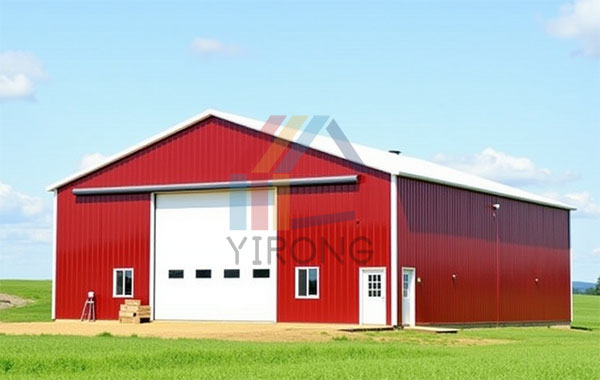
How can steel structure agricultural buildings help you offset 15% income tax?
With the trends of agricultural modernization and green building, more and more companies are focusing on a key issue: how to simultaneously save taxes and reduce costs when constructing agricultural warehouses or processing plants?
Taking the Brazilian market as an example, the government has explicitly supported industrial and agricultural infrastructure construction in recent years through a series of investment incentive policies, including allowing certain fixed asset investments (such as steel-structured factory buildings) to be deducted or exempted from corporate income tax.
I. Core of Brazilian Policy
In Brazil’s investment tax system, companies can optimize their tax burden on productive assets (including factory buildings, equipment, etc.) through various means, such as:
Accelerated depreciation and cost amortization: used to reduce taxable profits.
Tax reductions or deductions for investment projects: enjoying preferential treatment based on project approval status.
Regional policy support (such as free trade zones): direct reductions or exemptions from corporate income tax.
For example, in specific industrial and agricultural development zones, approved companies can receive a certain percentage of income tax reductions or even temporary tax exemptions.
Meanwhile, Brazil’s tax system allows companies to deduct eligible investment costs before tax or to depreciate them, thereby reducing their tax liability.
👉 In practice, steel-structured buildings such as agricultural warehouses and processing plants are generally considered productive fixed asset investments and are eligible for tax deductions.
This is also commonly mentioned in the industry:
“Up to approximately 15% income tax optimization potential” (depending on the project and applicable policies).
II. Why are steel structure agricultural buildings easier to optimize for tax purposes?
Compared to traditional building forms, steel structures have natural advantages in terms of taxation and investment returns:
1. Clearly classified as depreciable assets, making compliant deductions easier
Steel-structured factory buildings are standard industrial assets, complying with the depreciation and pre-tax deduction rules of most countries, resulting in clearer tax treatment.
2. Shorter construction period, faster tax deduction period
Steel structure projects can typically be completed and put into use within a few months, meaning:
These components have clear cost breakdowns, which is beneficial for tax declaration and auditing.
4. Sustainable building, better aligned with policy direction
Current global policies (especially in Latin America and the EU) generally encourage:
Green building
Low-carbon materials
Recyclable structures
Steel structures have advantages in high recyclability and low-carbon construction, making them more likely to obtain policy support.
III. Industry Trends
Agricultural infrastructure is undergoing a significant shift:
👉 From simple construction to integrated investment, taxation, and operation.
Businesses are increasingly focused on:
How to reduce initial investment costs?
How to improve returns through tax policies?
How to shorten the investment recovery period?
Under this trend, steel-structured agricultural buildings are not merely architectural products, but have become an “asset tool for optimizing taxation.”
IV. Applicable Scenarios
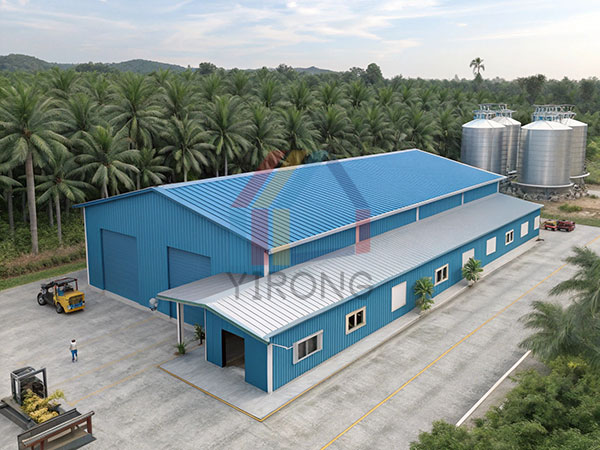
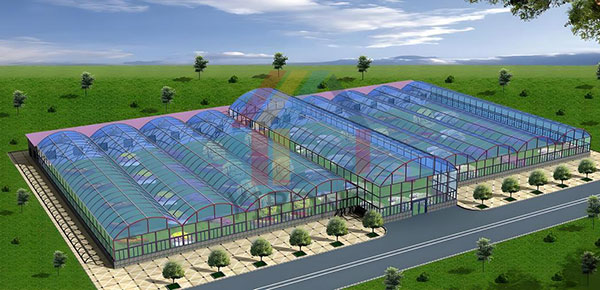
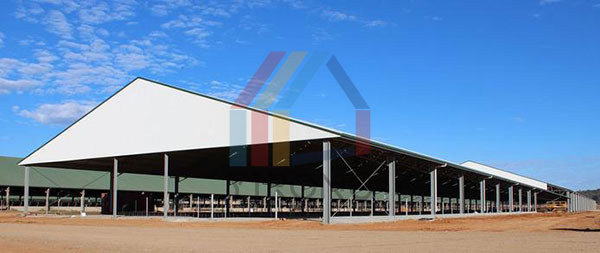
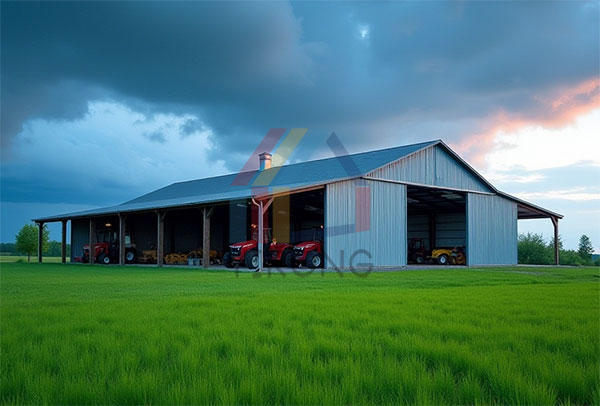
Steel structure agricultural buildings are most likely to achieve dual benefits in taxation and investment in the following scenarios:
These projects typically meet the definition of productive investment in various countries, making them more likely to qualify for tax incentives.
V. Yirong’s Solutions
Combining current national policies and industry development, Yirong Steel Structure Supplier has developed a mature one-stop solution to help clients maximize tax and investment returns.
✔ Design Phase: Anticipate Tax Structure
Consider the following during the design phase:
Investment Structure Breakdown
Depreciation Cycle Optimization
Compliance with Local Policy Requirements
✔ Manufacturing Phase: Standardization and Cost Control
Precise Steel Consumption Control
Reduce Material Waste
Increase ROI
✔ Delivery Phase: Rapid Implementation, Early Revenue Generation
Shortened Construction Cycle
Early Operational Startup
Faster Entry into Tax Deduction Period
✔ One-Stop Service: Reduced Overall Risk
Full-process service from design, production, transportation to installation guidance, reducing communication costs and uncertainties.
Conclusion
In Brazil and the global market, steel structure agricultural buildings are no longer just “building a warehouse,” but rather:
👉 A tool for reducing tax burden
👉 A means to improve ROI
👉 A path to green development
By making reasonable use of policies (such as income tax deductions) and choosing efficient steel structure solutions, companies can truly achieve:
“Build a project, save on taxes, and earn longer-term benefits.”
This is precisely the core competitiveness of agricultural building investment today.