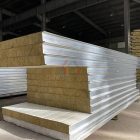
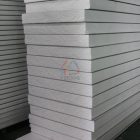
How do rock wool insulation panels safeguard your 2000-ton food cold storage?
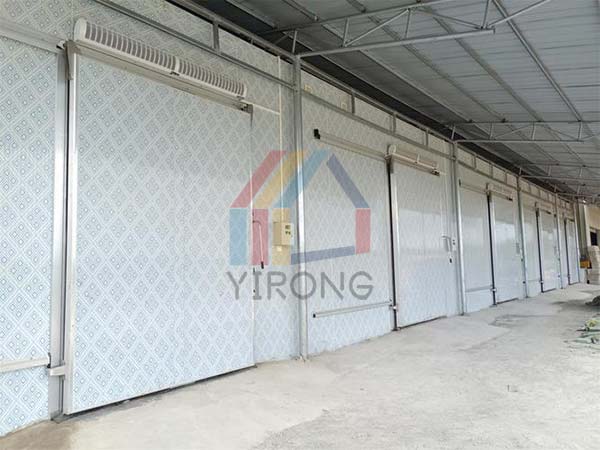
For a food factory, a cold storage facility holding 2000 tons of food is not just a warehouse, but the lifeline of the business. Every degree Celsius difference and every drop of condensation directly affects the safety and quality of the food.
In this battle for freshness, rock wool insulation panels play a crucial, silent role as a guardian. How does it work?
First Layer of Protection: Thermal Insulation
Imagine a sweltering summer day with outdoor temperatures exceeding 35°C, while your cold storage needs to maintain a constant -25°C. This 60-degree temperature difference is like a huge “heat debt,” constantly trying to flood the cold storage.
Ordinary insulation materials act like a thin coat, unable to withstand intense heat, leading to frequent starts and high-load operation of the refrigeration compressor, soaring electricity bills, and significant temperature fluctuation risks.
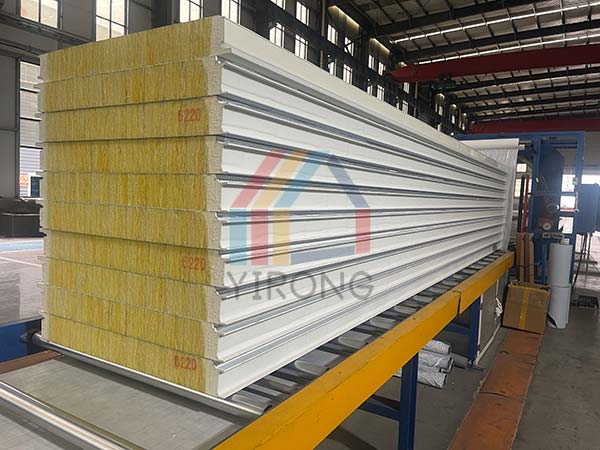
Rock wool insulation panels act like a professional “temperature-controlled armor.” Countless tough rock wool fibers interwoven within form a dense air gap, effectively blocking the intrusion of external heat. This ensures a consistently stable temperature inside the cold storage, keeping 2000 tons of food in an optimal preservation environment while saving you significant amounts on electricity bills.
The Second Layer of Protection: Insulation
“Cold bridges” are the hidden killers of cold storage insulation. They are weak points where heat easily penetrates, often appearing at the joints of the panels. At these points, the cold air inside the storage meets the hot air outside, producing deadly condensation.
Condensation not only damages the structure but also becomes a breeding ground for mold and bacteria, posing a direct threat to food safety.
Rock wool panels, due to their superior insulation and precise installation, effectively eliminate “cold bridges.” They ensure a uniform temperature on the entire inner surface of the enclosure structure, preventing condensation and physically eliminating mold growth, thus protecting the hygiene and safety of your food.
The Third Layer of Protection: Fire Prevention
Cold storage facilities are filled with electrical equipment, insulation materials, and goods, making the fire risk significant. The consequences of a fire are unimaginable.
Rock wool insulation panels, with their core material derived from natural rock, are A1-grade non-combustible materials. They can withstand temperatures exceeding 1000°C without burning or producing toxic fumes. In the event of a fire, they effectively prevent the spread of flames, buying you valuable rescue time and protecting your valuable assets and employees. This characteristic may even earn you a discount on commercial fire insurance premiums.
The Fourth Layer of Protection: Robustness and Durability
A cold storage facility storing 2000 tons of goods must have a robust structure. Rock wool sandwich panels possess extremely high compressive strength, are not easily deformed or settled, ensuring the cold storage structure remains intact and safe during long-term use, avoiding maintenance costs and operational interruptions due to insulation layer damage.
Why Rock Wool Panels are a Wise Investment?
Entrusting your 2000-ton cold storage facility with rock wool insulation panels means you simultaneously gain:
Energy Saving Expert: Significantly reduces energy consumption and saves operating costs.
Food Safety Guardian: Prevents condensation and mold, ensuring food quality.
Safety Firewall: Provides the highest level of fire protection.
Long-Term Investor: Robust and durable, reduces maintenance, and offers a high return on investment.
Therefore, choosing rock wool insulation panels are not just choosing a building material, but choosing a reliable and efficient guardian for your food supply chain. It stands silently, ensuring that every ton of food, from the first to the second thousand tons, is safe and fresh.