On the vast pastures of Australia, in the cornfields of the American Midwest, and on the fertile soil of Northeast China, harvesters, tractors, and planters often face the same challenge after completing their work: how to properly store these agricultural equipment?
Open-air storage risks rusting from rain and snow, simple wooden sheds can’t withstand typhoons, and concrete warehouses are expensive and take up space…
At this time, farm equipment metal storage buildings are becoming an attractive option for farmers. What exactly are they? Why can they replace traditional storage methods?
I. Metal Storage Building for Farm Equipment
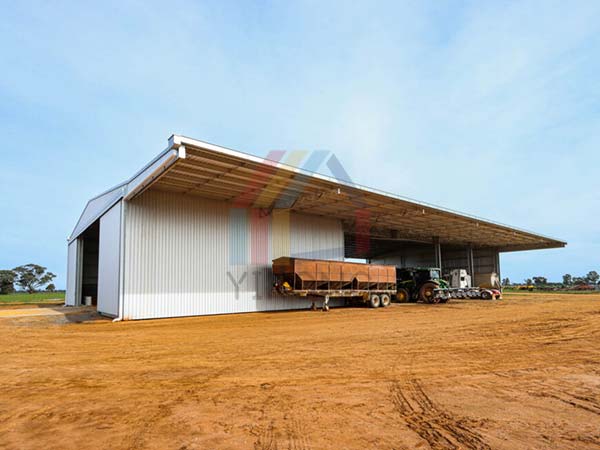
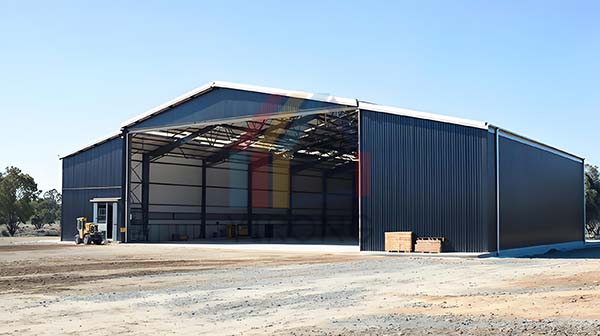
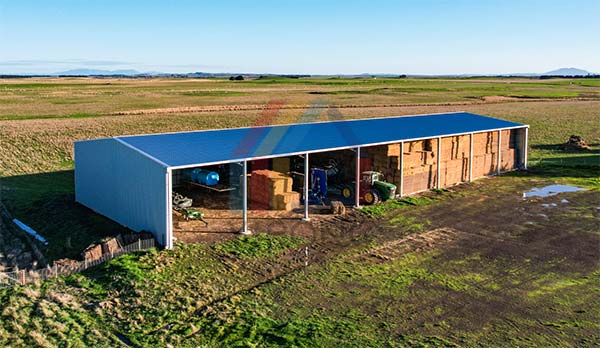
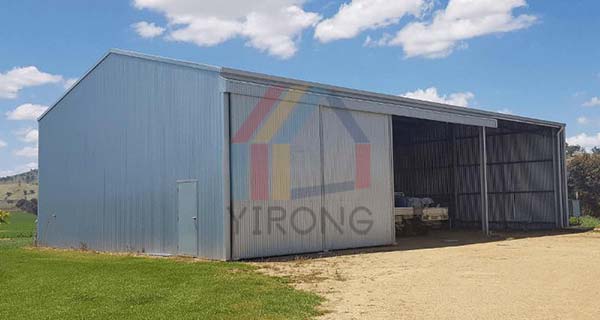
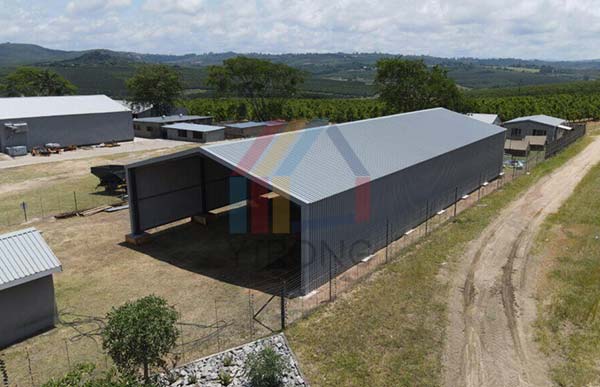
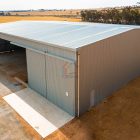
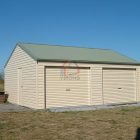
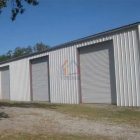
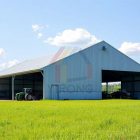
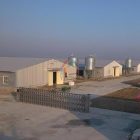
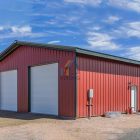
Simply put, these are modular/prefabricated buildings with steel as their core structure, designed specifically for storing agricultural machinery. Unlike ordinary warehouses or sheds, they are tailored to the size, weight, and protective requirements of farm equipment, with functionality enhanced from the frame to the enclosure system.
Core Structure
Main Structure: Made of Q235/Q345 carbon steel or low-alloy high-strength steel, the frame is bolted together (e.g., H-beam columns and C/Z-beam purlins). Its wind load resistance (level 12 and above) and snow pressure resistance far exceed those of wood or lightweight steel structures.
Enclosure System: Roofs are typically constructed of single-layer or sandwich color-coated steel sheets, while walls can be constructed of color-coated steel sheets or metal mesh. Sealant strips and concealed drainage systems are used to completely prevent rainwater infiltration.
Functional Accessories: Rolling shutters, ventilation fans, lighting systems, and even charging ports for agricultural machinery can be added.
II. Why Farmers Choose It?
1. Rust and Corrosion Resistance
What are farm machinery most afraid of? Rust from moisture, salt spray corrosion, and pesticide residue. A $70,000 combine harvester stored outdoors for three years has a 60% chance of failure due to rust in the chassis and circuitry, and repair costs could reach 30% of its original value. Metal storage buildings utilize hot-dip galvanized steel with a double-sided anti-corrosion coating. They offer over 15 years of salt spray resistance in coastal areas, and a 90% reduction in rust rates when paired with an epoxy zinc-rich primer in high-humidity areas.
A farmer in Iowa, USA, conducted a real-world test: after five years of storage in a metal building, the engine start rate for the same batch of tractors remained at 95%, compared to only 60% for those stored outdoors.
2. Strong Disaster Resilience
Agriculture relies on the weather, so storage buildings must be even more resilient:
Typhoon-Resistant: The frame has been wind tunnel tested and can withstand a Category 14 typhoon. Bolted connections and reinforced ribs prevent strong winds from blowing the roof off.
Snowstorm-Resistant: Designed to withstand a snow load of 200kg/㎡, the roof, with a slope of ≥10°, allows snow to slide naturally, preventing structural collapse.
Fire Safety: The rock wool sandwich panel version can isolate fires caused by fuel leaks from agricultural machinery and complies with international fire safety standards such as EU EN 13501-1 and US UL 723.
3. Low Cost, High Return
On the surface, the initial investment in a metal building may be 30% higher than a wooden shed, but over its entire lifecycle, it offers greater value.
Maintenance Costs: Wooden sheds require annual anti-corrosion paint and replacement of rotten boards (approximately $5,000 annual maintenance), while metal buildings require only bolt inspection and tightening within 10 years, resulting in virtually zero maintenance.
Space Utilization: The modular design allows for customizable heights (6-15 meters) and spans (10-60 meters), easily accommodating a 20-meter-long silage truck, eliminating the space waste associated with traditional warehouses.
Value Retention: Metal frames are recyclable (with a residual value of approximately 60%), while wooden sheds essentially become waste after dismantling.
4. Adaptability to Global Climates
The needs of farmers vary greatly across regions, but metal buildings offer a wide range of uses.
Cold Regions (Canada, Russia): The sandwich panels (polyurethane core) have a thermal conductivity of only 0.022 W/m·K. Combined with an internal heating system, the room temperature remains above 5°C in winter, preventing hydraulic oil solidification and battery drain.
Hot and Dusty Regions (Middle East, Africa): The exterior layer of color-coated steel and the interior layer of insulation keep the interior temperature 15°C lower than the outside in summer. The sealed design blocks 90% of dust and sand, protecting precision agricultural machinery sensors.
Highly Humid and Rainy Regions (Southeast Asia, South America): The roof slope is increased to 15°, and EPDM rubber sealing strips are used, ensuring no leakage for 72 hours of continuous heavy rain.
5. Flexible Expansion
Agriculture is a long-term endeavor, and farm size can expand year by year. The metal storage building features a bolt-together modular design. Want to expand later? Simply join the frame and add additional panels, eliminating the need for reconstruction. A farmer in Kansas, USA, expanded from 500 acres to 2,000 acres by extending the existing metal building by 300 square meters, with the total cost being only one-third of the new construction.
III. Farmers’ Choices Prove Value
Queensland, Australia: A ranch stored five large forage harvesters using a metal building with galvanized aluminum and rock wool sandwich panels. Three years later, the equipment remains rust-free, and the indoor humidity remains below 60% during the rainy season.
Ohio, USA: A family farmer stored two John Deere tractors and accompanying seed drills. The metal building’s rolling doors allow the machinery to enter and exit in just two minutes, saving 80% of the time compared to a wooden shed.
Heilongjiang, China: A cooperative stored 10 combine harvesters. The metal building’s snow-resistant design easily handles up to 50 cm of snow, achieving a 100% equipment startup rate during the winter.
Conclusion
For farmers, equipment is a liquid asset, and storage preserves it. Metal storage buildings for farm equipment are more than just sheds. They harness the toughness of steel to withstand the elements. They offer modular flexibility to adapt to your farm’s growth. They protect every ounce of hard work with low-cost, long-term returns.
Whether you’re a fledgling family farm or a large-scale agricultural enterprise, choosing a professional metal storage building means your harvester is always ready for the next planting, turning every piece of farm machinery into a profitable asset.