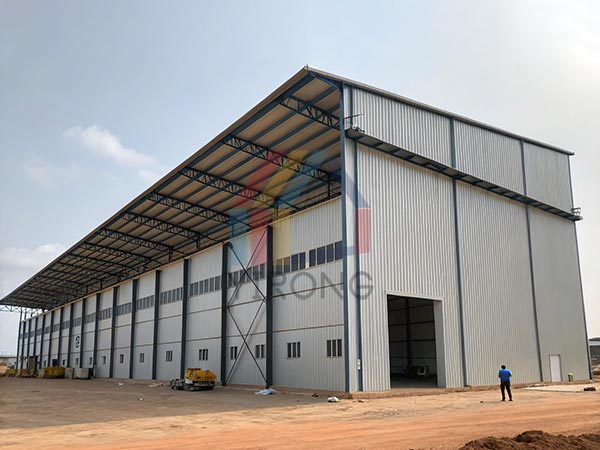
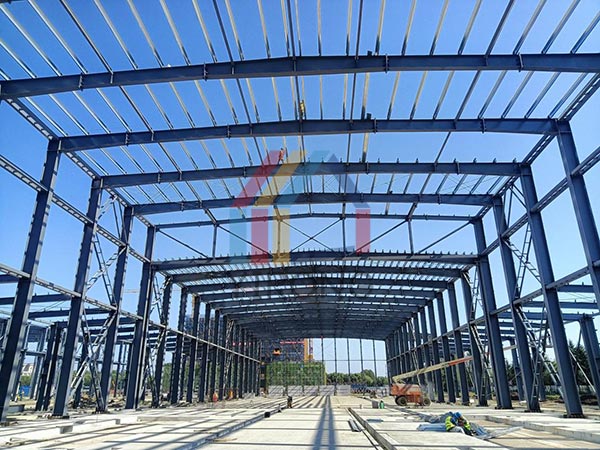
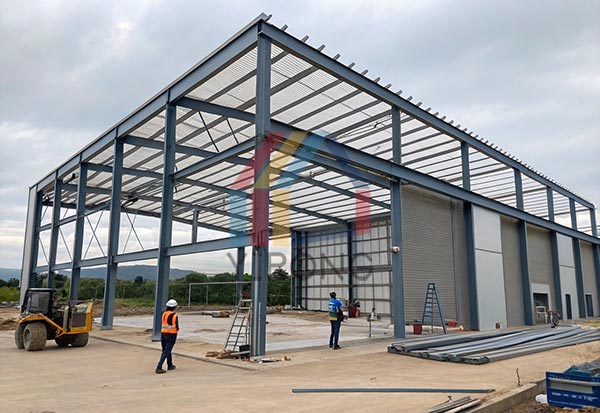
Fire prevention and insulation solution for metal frame warehouse
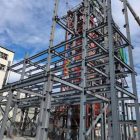
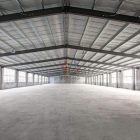
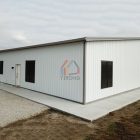
Against the backdrop of surging demand for industrial warehousing, metal frame warehouse has become the core infrastructure of the manufacturing and logistics industries with their advantages of light weight, fast construction, and strong load-bearing capacity. However, metal frames have strong thermal conductivity, are prone to forming cold and hot bridges, and have insufficient fire protection levels, which puts owners in a dilemma of energy saving without fire protection or fire protection without heat preservation.
How to achieve dual upgrades of fire protection and heat preservation while meeting fire protection regulations (such as EU EN 13501-1, US ASTM E84) and energy-saving standards (such as China GB 50189, ISO 52000)? This article will analyze the optimal combination from the perspective of materials science, and propose cost-effective solutions based on global cases.
1. Difficulties in fireproofing and heat preservation of metal frame warehouse
The core problem of metal frame warehouse is the natural conflict between metal and heat preservation and fire prevention:
Strong thermal conductivity: The thermal conductivity of steel is about 50W/(m·K), which is 20 times that of concrete. When the temperature difference between the metal frame and the outside world is large, a “thermal bridge” will be formed on the wall and roof, resulting in local condensation and soaring energy consumption (measured data: the heating energy consumption of metal warehouses without insulation in winter is more than 40% higher than that of warehouses with insulation).
Low fire rating: Although steel does not burn, its strength will drop by 50% at a high temperature of 600℃ (the fire temperature of ordinary buildings can reach 800-1200℃). The metal frame alone cannot meet the requirements of the secondary fire resistance level of the warehouse (GB 50016-2014).
Difficult to adapt insulation materials: Although traditional insulation materials such as EPS (polystyrene) and XPS (extruded board) are low in cost, their fire rating is only B2/B3 (flammable), which cannot match the fire protection requirements of the warehouse. Fireproof materials such as rock wool and polyurethane are susceptible to moisture and aging, affecting long-term performance.
Core contradiction: It is necessary to find a composite material combination that can block metal thermal bridges, provide long-term stable fire protection, and be suitable for metal frame installation.
2. Comparison of mainstream material combinations
In order to solve the fireproof and insulation problems of metal frame warehouses, the construction field has explored a variety of material combination solutions. By comparing thermal conductivity, fire rating, durability and cost, the following two combinations are recognized as efficient and balanced solutions:
2.1 Rock wool + metal plate
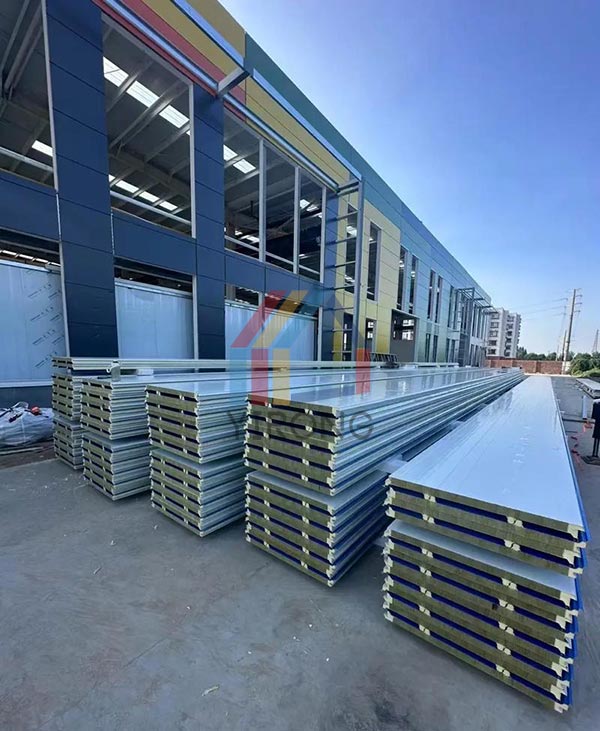
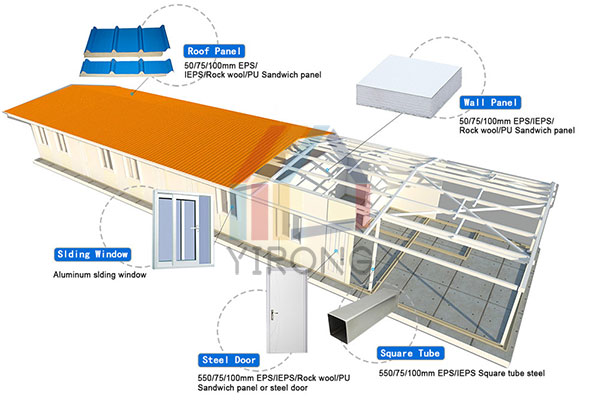
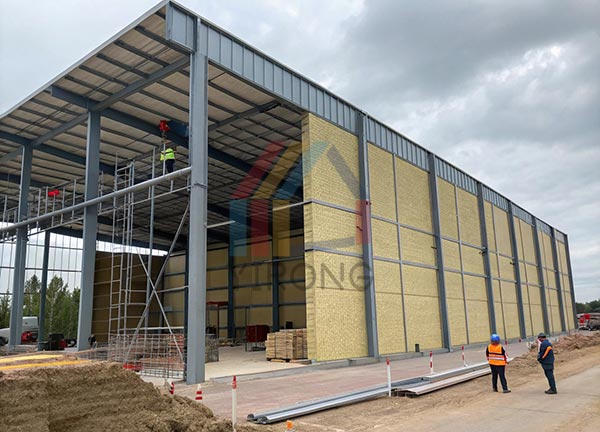
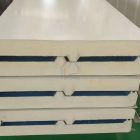
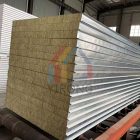
Structural design: The metal frame is the main body, and the walls and roofs are made of rock wool sandwich panels or rock wool filling + metal guard plate structure. Rock wool is used as the core insulation layer (density 100-150kg/m³, thermal conductivity ≤0.040W/(m·K)), and the outer layer is covered with 0.5-0.8mm thick galvanized steel plate (or aluminum-magnesium-manganese plate) as a protective layer.
Advantages:
Top fireproof performance: Rock wool is an A1 grade non-combustible material (in compliance with EN 13501-1, GB 8624). Even if the metal frame is deformed by heat, the rock wool layer can still maintain structural integrity and prevent the spread of fire.
Stable insulation efficiency: Rock wool fibers are slender, with low thermal conductivity and no cold and hot bridges (metal guard plates and rock wool are fixed by adhesives + anchor bolts to avoid direct contact).
Strong durability: Rock wool has a water absorption rate of ≤1% (after waterproofing treatment), and with the anti-ultraviolet coating of the metal guard plate, the service life can reach more than 25 years (actual data of European cases).
Limitations: Rock wool has a high density (metal frame load-bearing capacity ≥1.2kN/m² is required), which is more suitable for light-span warehouses (such as less than 30 meters). Installation requires professional sealing with high process requirements.
2.2 Polyurethane (PU) + fireproof coating
Structural design: The metal frame is filled with 50-80mm thick polyurethane foam (thermal conductivity ≤0.024W/(m·K)), and the outer metal plate surface is painted with fireproof coating (thickness ≥2mm, reaching B1 fireproof).
Advantages:
Ultra-light and ultra-thin: The density of polyurethane is only 40-60kg/m³, and the thickness of 80mm can achieve the insulation effect of 150mm rock wool, which greatly reduces the load-bearing capacity of metal frames (suitable for large-span warehouses).
Lower thermal conductivity: The thermal insulation performance is 1.5 times that of rock wool, and the heating energy consumption in winter can be reduced by another 15%-20%.
Convenient construction: Polyurethane can be sprayed or prefabricated on site, and has strong adhesion to metal frames (bonding strength ≥0.15MPa), and no additional anchor bolts are required for fixing.
Limitations: Pure polyurethane fire protection depends on coating (inadequate coating thickness is prone to failure), and long-term ultraviolet radiation may cause coating aging (maintenance is required every 5-8 years). Trace amounts of harmful gases may be released in high temperature environments (>80℃) (must comply with EN 13501-1 standards).
Conclusion: If the warehouse requires a high fire protection level (such as storing flammables) or a long life (more than 20 years), the “rock wool + metal plate” combination is preferred. If the focus is on energy-saving efficiency and large-span adaptation, “polyurethane + fireproof coating” is better.
3. The optimal solution under global trends
With the advancement of global low-carbon goals, the demand for fireproofing and insulation of metal frame warehouse has been upgraded from meeting standards to high efficiency and low carbon. The 2023 report of the International Building Research Institute (BRE) pointed out: “The composite system of rock wool + metal plate has become the mainstream choice for global industrial warehousing because it takes into account fire prevention, insulation and durability, especially in Europe, the United States and the Middle East, where fire prevention requirements are strict, accounting for more than 60% of the market.”
The core basis of this conclusion is that the A1 fireproof performance of rock wool can avoid more than 90% of warehouse fire risks. According to NFPA statistics, 45% of warehouse fires in the United States are ignited by insulation materials. And its stable insulation performance can reduce warehouse energy consumption by 30%-40%, in line with ISO 52000 standards.
4. Cost-effective solution of Yirong Metal Building Supplier
As a global supplier with 15 years of experience in metal building, Yirong has launched customized fireproof and thermal insulation solutions of “rock wool/polyurethane + metal plate” for metal frame warehouse in different scenarios. With the full-chain advantages of “materials + technology + service”, it has become the preferred choice for Chinese companies to go overseas and a cost-effective benchmark in the local market.
4.1 Core material combination: rock wool + galvanized steel plate (fire prevention priority scenario)
Rock wool layer: 120kg/m³ high-density rock wool (thermal conductivity 0.038W/(m·K)), fiber length ≥70mm (tensile strength ≥1.0MPa), waterproof treatment (water absorption ≤0.5%), suitable for humid areas (such as Southeast Asia and South America).
Metal guard plate: 0.6mm thick aluminum-zinc steel plate (galvanized layer 275g/㎡ + aluminum layer 55g/㎡), pre-coated with fluorocarbon paint (weather resistance ≥ 25 years), and fixed with rock wool by adhesive and stainless steel anchor bolts (wind resistance ≥ 12kPa).
Node design: Silicone weather-resistant glue is filled in the board seams (displacement capacity ± 25%), and metal drip lines are added to the eaves to completely prevent rock wool failure caused by rainwater penetration.
Polyurethane layer: B1 grade polyurethane (thermal conductivity 0.022W/(m·K)) is sprayed on site, with a thickness of 60-80mm (adjustable according to the span), and the bonding strength with the metal frame is ≥ 0.2MPa.
Fireproof coating: Water-based ultra-thin fireproof coating (thickness 1.5mm, fire resistance limit ≥ 2 hours) is selected, which has passed the national fire protection product certification (CCCF) and is resistant to ultraviolet aging for ≥ 15 years.
Construction advantages: Yirong adopts factory premixing and on-site spraying technology, with a thickness error of ≤2mm, which shortens the construction period by 30% compared with traditional prefabricated panels.
4.3 Full-cycle service: worry-free guarantee from design to operation and maintenance
Localized design: Adjust material parameters (such as rock wool density, polyurethane thickness) according to the climate of the project location (such as high humidity in Southeast Asia and high temperature in the Middle East).
Quick installation: All components are pre-processed in the factory (error ≤1mm), and only bolt connection and sealing treatment are required on site, which shortens the construction period by 40% compared with traditional construction.
Worry-free warranty: Provide 10 years of free maintenance (including rock wool moisture-proof detection, fireproof coating thickness re-inspection), key materials (such as rock wool, polyurethane) factory inventory, and respond to maintenance needs within 24 hours.
5. Conclusion
Today, as global industrial warehousing is transforming towards safety, energy saving and high efficiency, fire protection and insulation of metal frame warehouses are no longer a one-man show of a single material, but a comprehensive project of material combination, system adaptation and service guarantee. For owners, it is necessary to meet the rigid requirements of fire protection and energy saving, and control the initial investment and long-term operation and maintenance costs.
The cost-effective solution of Yirong Metal Building Supplier is precisely through the customized combination of rock wool + metal plate (fire protection first) and polyurethane + fire retardant coating (energy saving first), combined with global localized service capabilities, to provide warehouses in different scenarios with the optimal solution of safety without cost reduction, energy saving and trouble-free. Choosing Yirong is not only choosing a set of materials, but also choosing a construction partner who can accompany you to cope with climate challenges and help green transformation.