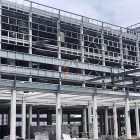
What precautions should be taken during the installation of multi-story steel structure building?
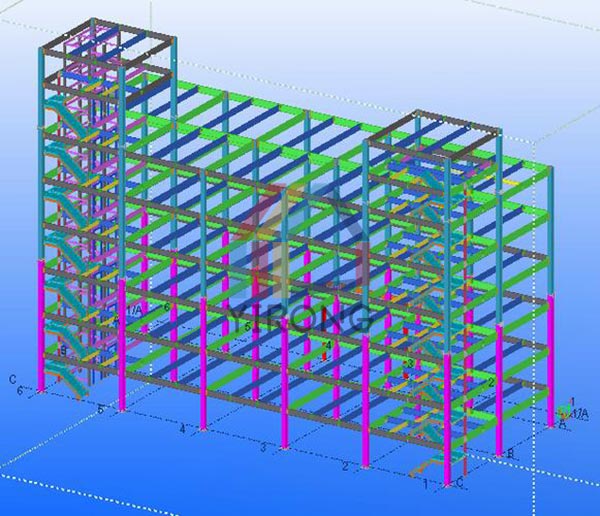
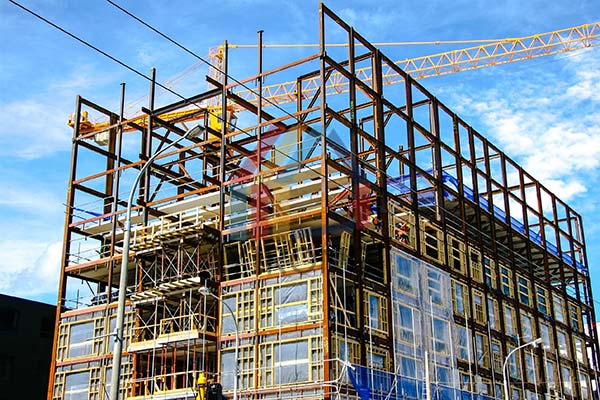
Multi-story steel structure buildings have become a mainstream construction choice globally due to their fast construction, high strength, and flexible space. However, the installation process involves precise collaboration and risk control. The following are general key precautions to help you complete the project efficiently and safely.
I. Preliminary Preparation
Design and Drawing Verification
Check the structural drawings (load, detail drawings) against site conditions (topography, surrounding buildings) to confirm that the models and dimensions of steel columns, beams, and supports are correct.
Mark the positions of embedded bolts (error ≤ 2mm) and elevation baselines to avoid rework later.
Site and Equipment Planning
Delineate the component stacking area (using wooden supports for moisture protection), hoisting passage (width ≥ 6m), and temporary office area to ensure smooth logistics.
Check the rated load of hoisting equipment (tower crane, truck crane) (must exceed the component weight by 20%) and the wear of wire ropes (broken wires ≤ 10%). Specialized operation personnel must hold valid certificates to work.
Material and Component Inspection
Check steel quality certificates (Q235/Q345, etc.) and weld flaw detection reports (UT/MT inspection qualified); reject components with excessive deformation or corrosion (e.g., steel column bending > L/1000).
II. Foundation Construction
Embedded Bolt Positioning
Use a total station to calibrate the bolt group center (deviation ≤ 3mm). Add protective covers to prevent displacement during concrete pouring. Curing period ≥ 28 days (strength reaches 90% or more of the design value).
Foundation Settlement Monitoring
Set up settlement monitoring points (one per column base) before installation and record initial data; monitor weekly during construction. Pause and reinforce if differential settlement > 2mm.
III. Component Lifting
Detailed Lifting Plan
Lift the main frame first, then the secondary components, prioritizing corner columns and middle columns. Large-span beams should be lifted in sections (each section ≤ 12m).
Lifting points should be selected above the component’s center of gravity. Long components (>9m) should have two lifting points to prevent lateral bending. Soft slings should replace wire ropes to contact vulnerable parts (such as coatings).
High-Altitude Work Safety
Workers should wear double-hook safety harnesses, with hooks secured to an independent lifeline. Platforms should be fully covered with scaffold boards, and 1.2m guardrails should be installed along edges. Lifting operations should be suspended during winds exceeding level 6 or heavy rain.
IV. Installation and Alignment
Symmetrical Installation Layer By Layer
When connecting steel columns, the deviation between the center lines of the upper and lower columns should be ≤3mm. Verticality should be corrected bidirectionally using a theodolite. Beam-column joint bolts: initial tightening (50% torque) → re-tightening → final tightening (according to design value ±10%).
Welding and Bolt Control
Preheating before welding (≥100℃ for thick plates), followed by slow cooling after welding. Important welds should undergo non-destructive testing; Class I welds should undergo 100% UT.
After the high-strength bolts are finally tightened, a random inspection using a torque wrench (10% of the quantity, error ≤ ±10%) is performed; 2-3 exposed threads are considered合格 (qualified).
V. Temporary Support and Monitoring
Setting up temporary supports
Before a stable frame is formed (e.g., during top-floor installation), use steel pipe supports or guy ropes to fix the steel columns (spacing ≤ 6m). For large-span areas, add temporary trusses.
Real-time deformation monitoring
During installation, use a level to track the steel beam deflection (allowable value L/400). Adjust immediately if any abnormality is found. After completion, the temporary supports must be removed symmetrically and in stages.
Connection quality: No bolts left loose, no porosity or cracks in welds;
Corrosion and fire protection: Coating thickness meets standards (fireproof coating ≥ design thickness), no missed areas.
Post-delivery maintenance recommendations
Regularly check bolt tightness (once a year) and weld corrosion (touch-up paint treatment). Recheck structural deformation after extreme weather.
Summary
The core of multi-story steel structure building installation is precise planning, strict risk control, and millimeter-level correction. Following the above steps, combined with local regulations (such as ISO 9001 quality system and OSHA safety standards), can significantly reduce rework rates and safety accidents.
Note: Safety is the bottom line, quality is life, and details determine the final result.