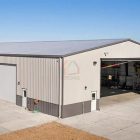
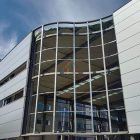
How to build a rust-free steel structure factory in Mauritius?
As the pearl of the Indian Ocean, Mauritius is not only a tourist destination, but also an emerging hot spot for industrial and construction investment. With the advancement of its economic diversification strategy, the demand for infrastructure construction and industrial projects has surged. In this context, building a factory can not only meet local market demand, but also radiate Africa and surrounding countries in the Indian Ocean, creating long-term economic value.
Why is rust-proof technology the core competitiveness of steel structure factory?
Mauritius has a tropical marine climate, with high temperature and humidity all year round, and a high salt content in the air, which poses a severe challenge to the corrosion resistance of metal materials. If traditional steel structures are not treated with rust prevention, they may rust within 3-5 years, resulting in a decrease in structural strength and a surge in maintenance costs. Therefore, rust-proof technology is the key to steel structures gaining a foothold in Mauritius.
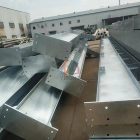
Hot-dip galvanizing (HDG): By immersing steel in molten zinc liquid to form a dense zinc-iron alloy layer, it can provide up to 50 years of anti-corrosion protection, especially suitable for marine environments.
Epoxy coating system: Multiple layers of coating (primer, intermediate paint, topcoat) form a physical barrier to resist moisture and salt spray erosion, and are suitable for buildings with high aesthetic requirements.
Corten Steel: By adding alloy elements such as copper and chromium, a stable oxide layer is formed on the surface to achieve “rust prevention” and reduce maintenance frequency.
In view of the characteristics of strong ultraviolet rays and long rainy season in Mauritius, a composite protection solution can be developed, such as “galvanizing + nano coating” to improve the ability to resist ultraviolet aging.
Core advantages of steel structure
1. High strength and fast construction
The strength of steel structure is more than 5 times that of concrete, and the unit weight is light, which is suitable for Mauritius’s needs of frequent typhoons and low earthquake risks but rapid construction. Prefabricated components can be processed in the factory, and the on-site assembly efficiency is increased by 60%, shortening the construction period of hotels and commercial complexes.
2. Environmental protection and sustainability
The Mauritian government has implemented the “Green Economy 2030” plan. Steel structures can be 100% recycled, and carbon emissions are 30% lower than concrete buildings, which is in line with policy orientation.
Reduce on-site construction waste and protect the fragile ecological environment of the island country.
3. Significant cost-effectiveness
Tax-free steel imports: Mauritius implements a low tariff policy on the import of industrial raw materials, and high-quality steel from China, India and other countries can be efficiently imported through Port Louis.
Low long-term maintenance costs: The life of rust-proof steel structures can reach more than 50 years, far exceeding traditional building materials, reducing the cost of the entire life cycle of the building.