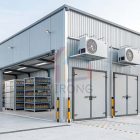
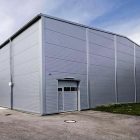
How can modular steel structures reduce the construction period by 30%-50%?
In developed countries in Europe and the United States, a large number of infrastructures built in the last century are facing an aging crisis. Corroded bridges, leaking pipe networks, lagging station functions, and long approval processes and on-site construction cycles have delayed the renewal project again and again. In emerging market countries, the rapid influx of people into cities is in dire need of housing, schools and hospitals, but traditional construction methods cannot keep up with the demand.
The “slowness” of infrastructure has become the core pain point restricting development. The modular steel structure is using the same idea of building a house as building a car to give a simple and powerful answer. The construction period is shortened by 30%-50%, which is not optimization but reconstruction.
What is a modular steel structures?
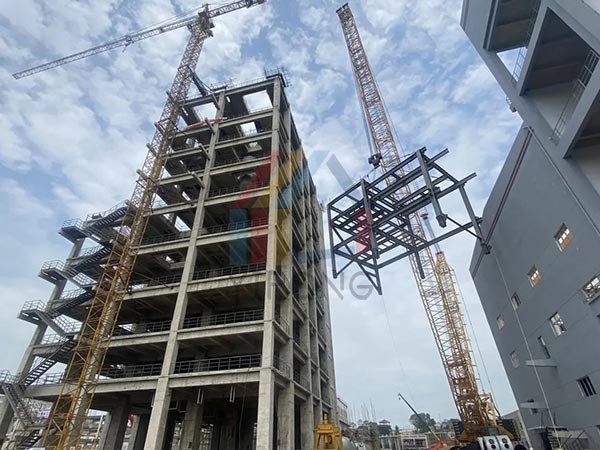
To put it simply, the building’s skeleton, beams, columns, floors, stairs, and even walls and equipment pipelines are all prefabricated in sections in the factory to form standardized modules. After being transported to the site, it only needs to be hoisted, spliced and fastened like building blocks, and the main body of the building will be basically formed.
Traditional on-site construction requires reinforcing steel bars, supporting formwork, pouring and curing, and welding. The processes are interlocking, and each step is subject to the weather and worker proficiency. The modular steel structure moves all these tasks into the factory assembly line with constant temperature and humidity, leaving only assembly on site.
How to save 30%-50% of the construction period?
Parallel jobs replace serial jobs. Under the traditional model, there is nothing to do at the factory while piling is being driven on site. In the modular scheme, foundation construction and module production are carried out simultaneously. The on-site land leveling has just been completed, and the steel structure modules in the factory are ready for use.
Not affected by weather. Rainy season, high temperatures, ice and snow, and bad weather in many overseas areas can eat up more than 30% of the effective construction period. Factory production is not affected at all, and on-site assembly operations only require a few core steps of hoisting and bolting, minimizing dependence on the weather.
Streamline on-site processes. Traditional steel structures require on-site high-altitude welding, which is not only dangerous, but also requires flaw detection, and one link will jam the entire chain. The modularization uses bolted connections, and positioning, tightening, and acceptance are all done in one go. Single-layer structures are often completed within one day.
Reduce secondary work. Many modules have been integrated with thermal insulation, doors, windows, and even water and electricity pipelines before leaving the factory. There is no need for additional plastering, slotting, or pipe routing on site. The main body is completed and is close to fine decoration and delivery.
Hidden advantages of modular steel structures
Quality is more controllable. The precision of automated welding in a factory environment is much higher than that of manual work on site. Each batch of modules undergoes unified quality inspection, so there will be no embarrassment of different quality among different teams.
The site is safer and quieter. There are no piled steel formwork, no high-altitude welding sparks, and the impact on surrounding communities is minimized, which is particularly critical for urban center renovation projects in Europe and the United States.
Detachable and removable. The modular steel structure is bolted together and can be dismantled and reassembled at another location in the future. For temporary schools, emergency hospitals, miner camps and other needs in emerging markets, this is an advantage that traditional concrete structures cannot match.
Real Cases
A student apartment project in the UK: The traditional plan is expected to last 18 months. After adopting the modular steel structure, factory production and foundation construction are carried out simultaneously. On-site assembly only takes 8 weeks, and the overall delivery time is compressed to 10 months, shortened by about 44%.
Expansion of a medical center in California, USA: Faced with strict noise restrictions and tight land conditions, the modular solution reduced the on-site construction time from 14 months to 6 months, while factory prefabrication avoided complaints from surrounding communities.
A mining camp in Africa: a residential and office complex with a capacity of 200 people. It only took 4 months from order confirmation to on-site put into use, of which only 3 weeks were used for on-site hoisting.
What scenarios is it suitable for?
Modular steel structures are especially suitable for the following infrastructure scenarios:
Renewal of old facilities in Europe and the United States: station additions, hospital expansions, and school floors added. The site is narrow and the construction window period is short. Modularization can greatly reduce the construction time at night and weekends.
Rapid urbanization in emerging markets: affordable housing, dormitories, office buildings, and small hospitals require rapid supply, and there is a shortage of local skilled workers.
Emergency and temporary facilities: post-disaster resettlement, makeshift hospitals, temporary venues for large events, all have extremely high requirements for delivery speed.
Facilities in remote areas: mines, oil fields, and scientific research stations have harsh on-site construction conditions. Factory prefabrication can significantly reduce the amount of on-site operations.
Conclusion
The root cause of slow construction lies not in lack of technical capabilities, but in the path dependence of the construction model. Modular steel structure is not a modification of traditional construction, but a process re-engineering. Move 80% of the work from open, uncontrollable sites to closed, efficient factories.
A 30%-50% reduction in the construction period means that aging bridges in Europe and the United States can be reopened to traffic earlier, children in emerging markets can sit in new classrooms earlier, and people in disaster areas can live in safe houses earlier.
Fast, not by cutting corners, but by building smarter. When the speed of infrastructure construction becomes a key variable in global competition, modular steel structures are becoming the game-breaker.