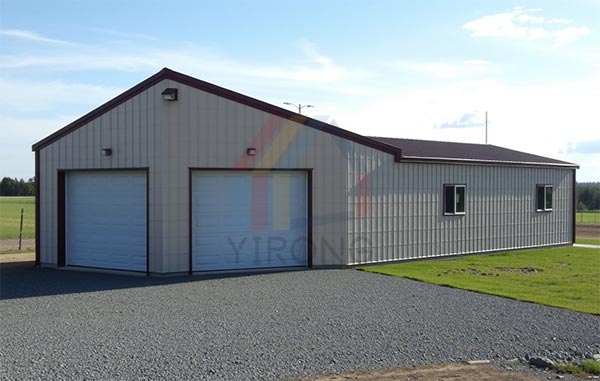
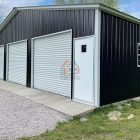
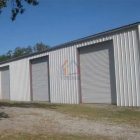
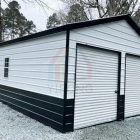
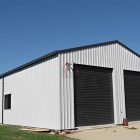
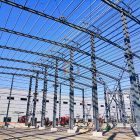
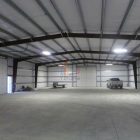
Against the backdrop of accelerated global urbanization and a surge in car ownership, metal structure garages have become the preferred solution in both industrial and civilian fields due to their advantages of fast construction speed, controllable cost, and high space utilization. However, its lifespan is influenced by multiple factors such as materials, design, environment, and maintenance.
Core influencing factors on the lifespan of metal structure garage
1. Material quality
Steel grade: Q355B or higher high-strength low-alloy steel is used, which can improve wind pressure resistance and corrosion resistance, and extend the service life by 20% -30%.
Anti corrosion coating: hot-dip galvanizing (zinc layer ≥ 85 μ m) or fluorocarbon spraying process, can effectively resist salt spray and acid rain erosion, suitable for coastal or industrial pollution areas.
Case: A metal garage in a logistics center in the Middle East is coated with galvanized and polyurethane to resist sandstorms and high temperatures, with no obvious corrosion for 10 years.
2. Structural design
Wind and earthquake resistant design: In areas with frequent typhoons, it is necessary to strengthen the connection of purlins and roof slopes (recommended to be ≥ 1/10), and in seismic zones, flexible support systems should be used.
Load redundancy: For car showrooms or cold chain warehouses, additional static loads (recommended ≥ 500kg/m ²) need to be added to avoid long-term deformation.
Data comparison: A metal garage in Northern Europe experienced roof collapse within 3 years due to not considering snow load. And the German standard design garage has a lifespan of over 30 years.
3. Connection technology
Welding vs. bolt connection: Welding nodes require rust prevention treatment (such as epoxy zinc rich primer), and bolt connections (high-strength bolts of grade 8.8) are easier to maintain.
Case: A metal structure garage in Australia had corroded nodes due to welding defects, resulting in a 40% decrease in structural strength after 5 years and forcing partial reconstruction.
Stainless steel bolts + ventilation/dehumidification systems
2. Differences in international standards
European and American markets: Must comply with ASTM A653 galvanizing standard, IBC seismic code, and provide third-party testing report when exporting.
Southeast Asian market: Emphasis is placed on fire resistance performance (such as BS 8414 testing), and it is recommended to use fire-resistant rock wool sandwich panels.
African market: Logistics park garages need to simplify maintenance design and prioritize the use of non galvanized self-lubricating bolts.
3. Supply Chain and Localization Services
Localized maintenance team: In overseas projects, collaborate with local builders to provide regular maintenance services and reduce user costs.
Modular design: supports remote diagnosis and component replacement, reducing downtime losses caused by transportation delays.
Practical strategies for extending the lifespan of metal structure garage
1. Construction phase: Whole life cycle cost optimization
Investing in high durability materials: Initial costs increase by 15%, but can reduce maintenance costs by over 50% in the later stages.
2. Preventive maintenance
Regular maintenance checklist: Check coating integrity every 2 years and evaluate structural deformation every 5 years.
3. Reserve extensibility during design
Detachable nodes: Support future functional upgrades (such as converting parking lots into warehouses) to increase asset residual value.
Standardized components: using universal specification steel, the depreciation rate is reduced by 20% during second-hand transactions.
Global typical case analysis
Case 1: German car showroom metal garage (lifespan of 25 years+)
Design highlights: hot-dip galvanizing+ceramic coating, resistant to UV aging; Redundant load design of truss structure.
Result: Despite extreme weather conditions, the structure remained stable, with a rental premium of 30%.
Case 2: Southeast Asian Cold Chain Logistics Garage (with a lifespan of 15 years+)
Result: Maintenance costs are reduced by 40% in an environment with 80% humidity, and energy consumption in cold storage is reduced by 18%.
Conclusion
The lifespan of a metal structure garage not only depends on materials and technology, but also requires comprehensive optimization based on global climate, standards, and user needs. Through scientific design, international compliance adaptation, and intelligent maintenance, enterprises can create cost-effective garages with a lifespan of over 20 years, seizing the opportunity in the global industrial and commercial markets. For overseas projects, it is recommended to prioritize suppliers with localized service capabilities to avoid risks from the source.