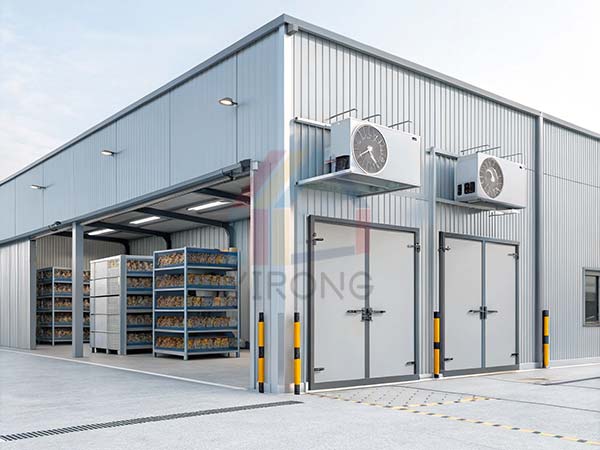
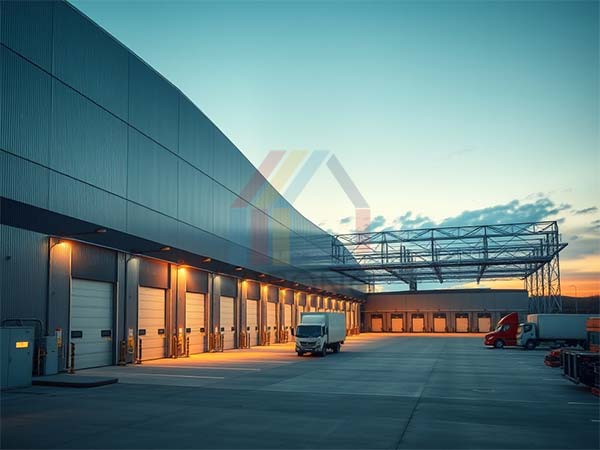
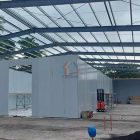
In the United States, the deep integration of cold chain logistics with industries such as food, medicine, and chemicals is driving the construction of cold storage into a period of rapid development. According to the Cold Chain Association (CCA) data, the size of the US cold storage market has exceeded $32 billion in 2023, with a compound annual growth rate of 7.8%. Among them, fresh e-commerce and biopharmaceutical companies have particularly strong warehousing demand. However, the core competitiveness of cold storage lies not only in its capacity, but also in its long-term stable insulation performance. This directly affects the loss rate, energy consumption cost, and operational lifespan of stored goods.
As a key link in the global cold chain infrastructure, the construction of cold storage insulation systems needs to take into account material performance, structural design, and system coordination. This article will break down the core product requirements for cold storage construction in the United States, and combine with the localization solution of China’s YIRONG Group to analyze how it has become a reliable partner in the US cold storage market through technological innovation and full chain services.
I. Core Product Requirements for Cold Storage Construction in the United States
The essence of a cold storage is a low-temperature environment container, and its insulation performance depends on three core elements: material thermal conductivity, structural sealing, and system durability. Due to climate differences (such as extreme cold in the Midwest and high humidity in the South), storage categories (such as -18 ℃ demand for frozen meat vs. 2-8 ℃ constant temperature for pharmaceutical products), and regulatory requirements (such as FDA food grade certification and ASHRAE energy efficiency standards), cold storage in the United States has more stringent requirements for insulation systems. Specifically, the construction of cold storage facilities should focus on the following products:
1. Core insulation material
The insulation layer of a cold storage is usually composed of wall/roof insulation board and ground insulation layer. The core material needs to have low thermal conductivity (λ value), high compressive strength, aging resistance, and fire rating. The mainstream choices in the US market include:
Polyurethane (PU) rigid foam: with a thermal conductivity as low as 0.022-0.027 W/(m · K), it is currently one of the most efficient insulation materials, suitable for environments ranging from -40 ℃ to+80 ℃, and widely used in high standard cold storage (such as pharmaceutical GMP warehouses).
Extruded polystyrene (XPS): thermal conductivity of about 0.028-0.033 W/(m · K), high compressive strength (≥ 250kPa), suitable for ground or high load areas, but long-term use may lead to performance degradation due to water absorption.
Polystyrene (EPS): Low cost (thermal conductivity of about 0.035-0.041 W/(m · K)), but with a fire rating of only B1 (some US states require A grade), it is mostly used for temporary storage or cost sensitive scenarios.
2. Sealing and auxiliary materials
30% -40% of the energy loss in cold storage is due to “cold bridge” effects such as splicing gaps and through wall pipelines. Therefore, the supporting products need to have:
Sealing strip: Made of EPDM rubber, with aging resistance of ≥ 20 years, suitable for temperature differences between -50 ℃ and+120 ℃.
Moisture proof and vapor barrier layer: Aluminum foil composite material (such as PE film+aluminum foil), which prevents water vapor from penetrating and causing condensation on the insulation layer.
Insulation sleeve for refrigeration pipeline: high-density polyurethane foam pipe shell, reducing the loss of cooling capacity in the refrigeration system.
3. Structural support and fire protection system: ensuring long-term safety
The cold storage wall needs to bear the weight of the insulation layer (such as polyurethane board density of about 40-60kg/m ³) and external loads, so the steel frame needs to use galvanized steel plate (thickness ≥ 1.2mm) and be matched with fireproof coating (in accordance with ASTM E84 standard, flame spread index ≤ 25). In addition, most states in the United States require cold storage facilities to be designed in accordance with NFPA 220 standards, with strict planning of fire compartments and escape routes.
II. Yirong’s Solution
Faced with the high standard demand of the US cold storage market, China Yirong Group, with 15 years of experience in cold chain infrastructure, provides customers with full cycle solutions through the “material+technology+service” three in one model. Its core competitiveness is reflected in the following dimensions:
1. Customized insulation materials
Yirong has developed a differentiated insulation product matrix for different regions and storage needs in the United States:
Special board for extremely cold regions: For states such as Minnesota and North Dakota with temperatures below -30 ℃ in winter, we have launched a “polyurethane+aerogel composite board” with a thermal conductivity as low as 0.018 W/(m · K) and a freeze-thaw cycle of ≥ 500 times (ordinary PU board only has 200 times) to avoid material brittleness at low temperatures.
Pharmaceutical GMP high standard board: Passed FDA USP Level VI certification (biocompatibility), USDA food contact level certification, surface covered with PE film (no formaldehyde release), meeting the cleanliness requirements for vaccine and biological product storage.
Moisture resistant board for high humidity areas: In humid states such as Florida and Louisiana, a composite structure of “XPS substrate+nano hydrophobic coating” is used, with a water absorption rate of ≤ 0.5% (1.5% for ordinary XPS), effectively inhibiting mold growth.
2. Cold bridge blocking technology
The fully sealed splicing system independently developed by Yirong solves the cold bridge problem through three major innovations:
Enterprise locking process: The edge of the insulation board is double locked with “male and female grooves+sealant”, with a splicing gap of ≤ 0.5mm (industry standard is 1mm), and is filled with on-site foam adhesive, resulting in a thermal conductivity improvement rate of less than 3%.
Integrated sleeve for through wall pipelines: Customized “prefabricated insulation sleeves” (made of the same material as the wall insulation layer) are used for through wall points such as refrigeration pipelines and lighting circuits to avoid sealing failure caused by later cutting.
Metal frame insulated bridge: Polyurethane insulation gasket (thickness ≥ 20mm) is embedded at the contact between the steel column and the insulation board, reducing the metal thermal conductivity (about 50 W/(m · K)) by 90% and preventing thermal conduction short circuit.
3. Worry free guarantee from construction to operation and maintenance
Cold storage operators in the United States generally pay attention to the cost balance of “initial investment+long-term operation and maintenance”. Yirong reduces comprehensive costs through “design build operation and maintenance” integrated services:
BIM digital design: Using Building Information Modeling (BIM) to simulate the thermal distribution of cold storage, optimizing the thickness and structural layout of the insulation layer in advance, and avoiding material waste (saving an average of 15% of costs).
Quick installation system: The insulation board adopts a “modular prefabrication+on-site bolt fixation” mode, with a daily installation area of up to 800 square meters (traditional on-site pouring only 200 square meters), shortening the construction period by more than 30%.
III. Localization advantages of Yirong
In the international cold chain market, Chinese companies often face challenges such as difficulty in adapting technical standards and slow response to localized services. Yirong has built unique competitiveness through a deep localization strategy:
Complete certification:
The product has passed over 20 authoritative certifications in the United States, including ASHRAE 90.1 (energy efficiency), UL 263 (fire protection), FDA 21 CFR 177 (food contact), etc., and can directly enter the mainstream bidding system.
Case verification:
We have delivered over 50 projects for the top 50 cold chain companies in the United States, such as Sysco and US Foods, including benchmark projects such as the Houston Fresh Distribution Center in Texas (-18 ℃ low-temperature warehouse, 23000 square meters in area) and the San Diego Pharmaceutical Warehouse in California (2-8 ℃ constant temperature warehouse, A-level fire protection).
Supply chain collaboration:
Reserve commonly used insulation boards (available in stock to meet the demand of a 50000 square meter project).
Conclusion
In the US cold storage market, reliability is the core criterion for customers to choose. It not only means stable material performance, but also requires comprehensive system design, timely service response, and a deep understanding of local regulations and requirements. Yirong’s practice has proven that Chinese enterprises can become important participants in global cold chain infrastructure through technological innovation and localization.
For American cold storage builders, choosing Yirong is not only about choosing a set of insulation solutions, but also about choosing a long-term value guarantee from materials to operation and maintenance. This may be the best footnote to the irreplaceability of China’s supply chain in the global industrial division of labor.