Single-story vs. Multi-story: space planning guide for steel warehouse buyers
If your project prioritizes efficient cargo handling, large equipment operation, and efficient logistics, a single-story, large-span steel structure warehouse is generally a better choice. If your project is located in an area with high land costs and you want to maximize land utilization, a double-story or multi-story mezzanine steel warehouse offers greater investment value.
In today’s rapidly developing global logistics, e-commerce, and manufacturing industries, more and more companies are adopting steel warehouse. However, many clients face a common question at the beginning of their projects. Should they build a single-story warehouse, or a double-story or multi-story warehouse?
In fact, there is no absolutely best solution, only the solution that best suits the project’s needs. Companies should comprehensively consider land prices, cargo types, logistics efficiency, future expansion plans, and investment budgets to choose the building form that best suits their development.
Why is space planning so important?
A warehouse is not just a space to store goods; it directly impacts a company’s operational efficiency and long-term return on investment.
Proper space planning can help businesses:
Improve warehouse utilization;
Optimize logistics flow;
Reduce operating costs;
Improve loading and unloading efficiency;
Reserve space for future business expansion.
Therefore, determining the appropriate building type during the project design phase is more economical and efficient than later modifications.
Single-Story Large-Span Steel Structure Warehouses – The Best Choice for Efficiency
Single-story steel structure warehouses are the most widely used industrial building type globally, especially suitable for logistics, manufacturing, and bulk cargo storage.
Key Advantages
1. Higher Loading and Unloading Efficiency
Single-story warehouses allow for a horizontal flow of goods from unloading and storage to shipping, facilitating smoother operation of forklifts, AGVs, and logistics equipment, reducing vertical transportation links, and improving overall logistics efficiency.
2. Large-Span Column-Free Space
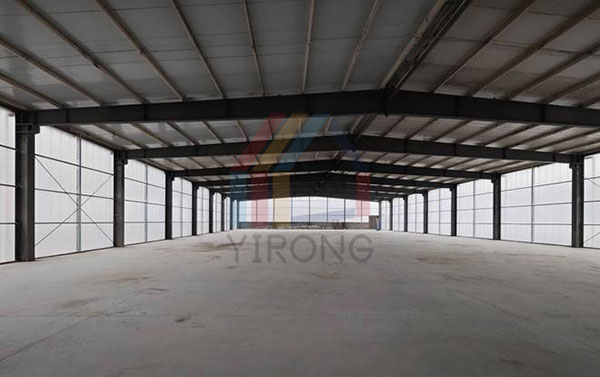
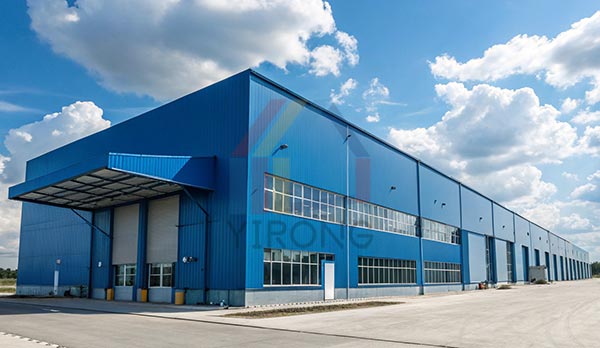
Steel structures can easily achieve column-free spans of 20 meters, 30 meters, or even larger, providing more flexible layout space for large equipment, racking systems, and automated logistics equipment.
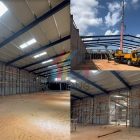
Large-Span Column-Free Steel Structure Warehouse
3. More Suitable for Large Machinery and Equipment
For projects requiring bridge cranes, heavy equipment, or large production lines, single-story warehouses offer greater headroom and higher load-bearing capacity.
4. Convenient for Future Expansion
As business grows, expansion can continue along the building’s length or width with minimal disruption to normal operations.
Applicable Scenarios
E-commerce Logistics Centers
Automated Warehousing Centers
Industrial Manufacturing Plants
Building Material Warehouses
Agricultural Product Storage
Cold Chain Logistics Centers
If businesses prioritize logistics and production efficiency, single-story, large-span steel structure warehouses are often the preferred option.
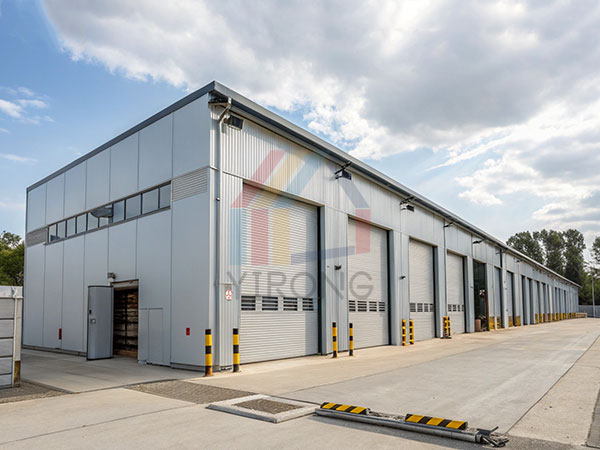
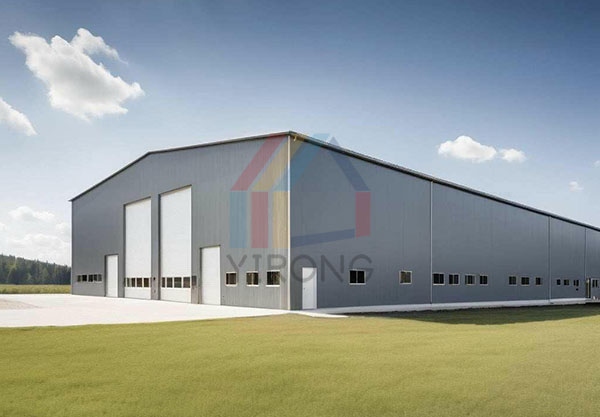
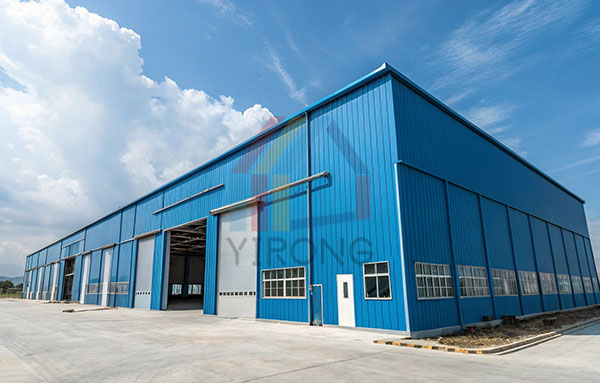
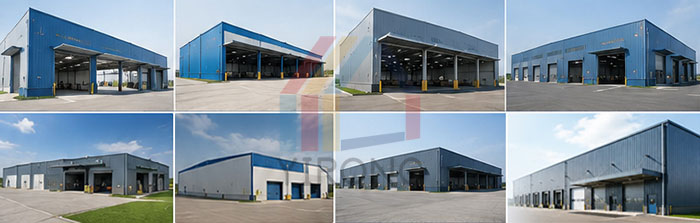
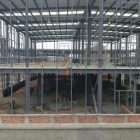
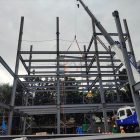
Single-Story Steel Warehouse
Double-Story and Multi-Story Mezzanine Steel Warehouse – Maximizing Land Utilization
In areas with limited land resources or high land costs, double-story or multi-story steel structure warehouses are becoming an increasingly popular choice for businesses.
Key Advantages
1. Improved Land Utilization
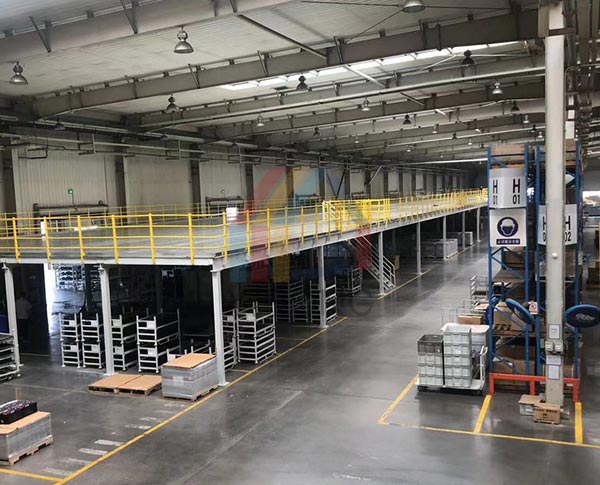
By adding mezzanine or multi-story structures, more usable space is gained without increasing the land area, making them particularly suitable for urban industrial parks and high-value land projects.
2. More Flexible Functional Zoning
Different floors can serve different functions, for example:
First Floor: Warehousing, logistics, loading and unloading;
Second Floor: Office, light warehousing, packaging area;
Third Floor: Exhibition area, equipment area, or auxiliary production area.
This achieves an integrated layout of warehousing, office, and management.
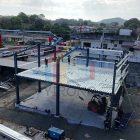
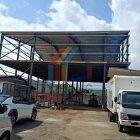
Steel Structure Warehouse with Mezzanine
3. Saves Land Investment
In areas with high land prices, although multi-story buildings have slightly higher structural investment, the overall land cost is often more advantageous.
Applicable Scenarios
Urban Logistics Center
E-commerce Operation Center
Pharmaceutical Warehouse
Electronics Manufacturing Enterprises
Commercial Distribution Center
High-Value Land Industrial Parks
If land resources are limited at the project site, a mezzanine or multi-story design can usually achieve a higher return on investment.
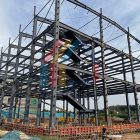
Multi-Story Steel Warehouse
How to Choose Based on Project Needs?
Different companies have different priorities. The following suggestions can be considered:
Project Requirement
Recommended Solution
Heavy equipment manufacturing
Single-story large-span warehouse
High-efficiency loading and unloading
Single-story large-span warehouse
Automated high-bay warehouse
Single-story or high-clearance warehouse
High land cost
Two-story or multi-story warehouse
Combined office and warehouse
Two-story warehouse with mezzanine
Urban distribution center
Multi-story warehouse
Future expansion
Single-story warehouse
Maximize land utilization
Multi-story warehouse
The project planning stage should comprehensively consider the business development direction, rather than just comparing initial construction costs.
Steel Structures Enable More Flexible Space Planning
Compared to traditional concrete buildings, steel structure warehouses have stronger spatial adaptability.
Whether single-story or multi-story, flexible designs are available to meet diverse client needs:
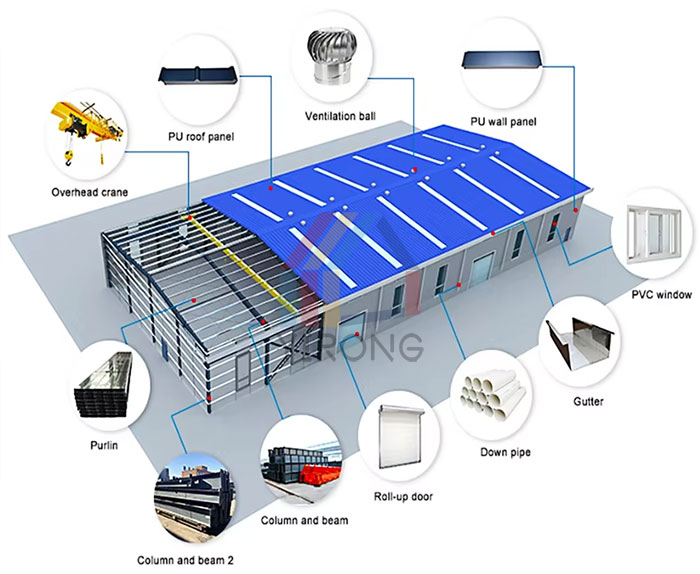
Large-span column-free spaces;
High-clearance storage;
Steel structure mezzanine platforms;
Crane beam systems;
Automated storage equipment interfaces;
Future expansion planning.
This modular design allows businesses to continuously adjust their spatial layout as their operations grow, without the need for large-scale demolition and alterations.
Conclusion
There is no absolute superiority between single-story and multi-story steel warehouse, the key is whether they meet the company’s development needs.
If your project prioritizes loading and unloading efficiency, production efficiency, and equipment operation, a single-story, large-span steel warehouse offers more efficient and flexible logistics space. If your project is located in an area with high land costs and you wish to fully utilize limited land resources, a double-story or multi-story mezzanine system can create higher spatial value and return on investment.
As a professional steel structure building solutions provider, Yirong Group offers a one-stop service to global clients, tailored to project location, industry characteristics, and operational needs. This service encompasses solution planning, structural design, steel structure manufacturing, and installation guidance, helping clients choose the most suitable spatial planning solution for their development and maximize building value.