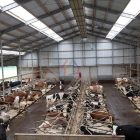
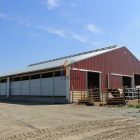
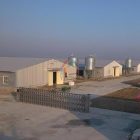
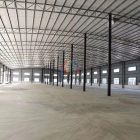
How to scientifically build an efficient and durable modern steel-structured cattle barn?
Amidst the wave of agricultural modernization, large-scale farming has become a key path to improving efficiency and reducing costs. For the cattle industry, the cattle barn, as the core living space for livestock, has a direct impact on herd health, productivity, and long-term profitability.
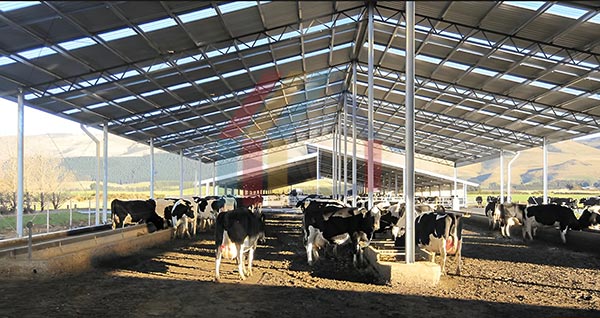
Traditional brick-concrete cattle sheds are gradually being phased out due to issues such as long maintenance cycles, poor disaster resistance, and poor environmental performance. Steel-structured cattle barn, with their advantages of lightweight, high strength, quick assembly, and flexible adaptability, are becoming a new choice for livestock farmers worldwide. This article will explain how to build a high-quality large cattle shed, from preliminary planning to implementation.
Ⅰ. Preliminary Planning
The first step in building a large cattle barn is not simply purchasing materials; it requires careful planning. While livestock needs vary significantly across different regions of the world (e.g., tropical regions require heat protection, cold regions require insulation, and high-humidity regions require moisture protection), the underlying principles of scientific planning remain the same.
1.1. Site Selection
Topography and Drainage: Prefer high, dry land with a gentle slope (5-10°), avoiding low-lying, flood-prone areas. The cattle shed floor should be 30-50 cm higher than the surrounding ground, and equipped with an open ditch or concealed drainage system to prevent water accumulation during the rainy season, which can lead to hoof disease and feed mold.
Ventilation and Lighting: The cattle barn should be located away from residential areas (at least 500 meters) to minimize odor problems, but close to feed processing areas and transportation routes to minimize material handling distances. The cow shed is recommended to face north-south, ensuring direct sunlight in winter (to increase room temperature) and natural ventilation in summer (to reduce heat stress).
Epidemic Prevention and Regulations: Comply with the animal quarantine certificate requirements set by the local agricultural department, maintain a minimum distance of 200 meters from major traffic arteries, and a protective distance of at least 1,000 meters from water sources (such as rivers and wells).
1.2. Scale and Function
Cattle Stock Calculation: Determine the cattle shed area based on the number of cattle in stock (e.g., beef cattle, dairy cattle, and fattening cattle). Taking beef cattle as an example, each fattening cow requires 8-10 square meters (including an activity area), while lactating cows require 12-15 square meters. If equipped with an automatic feeding system, aisle width can be appropriately reduced (saving 5%-8% of the area).
Functional Zoning: Large cattle sheds should be divided into three main areas: living area (feeding and resting area), activity area, and manure area. It is recommended that the manure area be separated (at least 10 meters from the living area) and equipped with slatted floors and automatic manure scrapers to reduce manual manure removal costs. Space should be reserved in the living area for water troughs (20-30 cm per cow) and feeding troughs (40-50 cm per cow).
Automation Reserve: To allow for future upgrades (such as environmental control systems and intelligent feeders), the recommended height for the cowshed is 4.5 meters or higher. The roof should include space for equipment installation beams, and the walls should include holes (diameter ≥ 10 cm) for cables and water pipes.
Ⅱ. Material Selection
Traditional cowsheds are mostly simple structures made of brick-concrete, wood, or color-coated steel sandwich panels. However, with global climate change and increasingly stringent environmental regulations, the comprehensive advantages of steel structures have become increasingly prominent.
Comparison Dimensions
Brick-concrete Structure
Wooden Structure
Ordinary Color Steel Shed
Steel Structure Cowshed
Seismic Resistance
Poor seismic performance (prone to collapse)
Prone to rotting and termite damage
Wind resistance ≤ Level 8; Snow load ≤ 150kg/㎡
Wind resistance ≥ Level 12; Snow load ≥ 300kg/㎡
Construction Period
3-6 months (weather-dependent)
2-4 months (time-consuming wood drying)
1-2 months
20-30 days (factory prefabrication + on-site rapid assembly)
Environmental Friendliness
Generates large amounts of construction waste after demolition
Consumes non-renewable wood resources
Thin galvanized layer, prone to rust and pollution
100% recyclable, no construction waste
Maintenance Cost
Requires major repairs within 5 years (wall cracking)
Requires anti-corrosion treatment every 3 years
Requires repainting and anti-rust every 2 years
Only local maintenance needed within 10 years (anti-corrosion coating)
Service Life
20-30 years
10-15 years
8-12 years
25-30 years
Take the rainy regions of southern China as an example: brick-concrete cowsheds often develop water seepage cracks in the walls within five years, and repair costs account for 15% of the total investment. Steel-structured cattle barn, on the other hand, feature hot-dip galvanized steel components and waterproof color-coated steel roofs, resulting in no structural damage for 10 years, requiring only annual inspections of bolt tightness. In the cold regions of Northern Europe, steel structure cow shed, combined with insulation and double-glazed glass, can maintain winter room temperatures 8-10°C higher than conventional sheds, significantly reducing the risk of milk production decline in dairy cows.
Ⅲ. Structural Design
The core value of a steel-structured cattle barn lies not only in the materials themselves, but also in its modular design, which precisely matches the needs of livestock farmers. A high-quality steel-structured cowshed must include the following six systems.
3.1. Main Frame
Q355B galvanized steel components are used, with main steel columns spaced 6-8 meters apart. Roof beams utilize variable-section H-section steel. All steel components are pre-fabricated in the factory (tolerance ≤ 2mm) and connected on-site with high-strength bolts, increasing construction efficiency by three times.
3.2. Roof and Walls
Roof: A three-layer composite structure of color-coated steel tiles, insulation wool, and waterproof membrane is recommended (such as Yirong Steel Structure’s 90-type color-coated steel tiles + 100kg/m³ centrifugal wool + TPO waterproof membrane). This ensures thermal insulation (inside the shed is 5-8°C lower than outside temperatures in summer) and heat preservation (heat loss is reduced by 40% in winter). The roof slope (≥30°) also allows for rapid rainwater drainage.
Walls: Color-coated steel sandwich panels (≥50mm thick) or glass wool sandwich panels are used. A cement-based waterproof skirt is applied at a height of 1.2 meters from the bottom, with adjustable louvres on both sides.
3.3. Ventilation and Temperature Control
Natural Ventilation: A through-draft system is created using rooftop fans and high-positioned side wall inlets. This system is suitable for spring and autumn.
Mechanical Ventilation: In winter or in high-humidity regions (such as Southeast Asia), a negative pressure fan and a wet curtain should be installed. These, combined with a temperature sensor, automatically start and stop the system to ensure an optimal growth environment for the cattle.
3.4. Flooring and Manure Treatment
Flooring: A combination of non-slip patterned steel plates (thickness ≥ 3mm) and a concrete pad (thickness 15cm), with a surface slope of 2%-3%, is used for both slip resistance and ease of cleaning.
Manure Area: An automatic manure scraper and cesspool are installed, with manure cleaned twice daily to reduce ammonia concentrations (to below 15ppm to prevent respiratory illnesses).
3.5. Water, Electricity, and Smart Technology
Electric Circuits: Independent transformer (capacity calculated as cattle shed area x 15W/㎡), cables routed through PVC pipes (rodent-proof), waterproof sockets (IP65 rating) installed every 20 meters.
Smart Design: Rooftop solar panel installation sites are reserved (compatible with a photovoltaic + energy storage system to reduce electricity costs), and wall panels are reserved for sensor interfaces (for temperature, humidity, ammonia concentration, and cattle activity monitoring) to prepare for future integration into smart farming platforms.
IV. Construction Process
The construction of steel structure cattle barns must strictly follow four phases: foundation construction, frame assembly, enclosure, and equipment commissioning. Global projects require special attention to local adaptation. For example, in seismic zones, steel column anti-seismic hoops must be reinforced, and in coastal areas, the number of steel component anti-corrosion layers must be increased. The following is the standard process:
4.1. Foundation Construction (7 days)
Surveying and Setting Out: Position the steel column foundation according to the design drawings (error ≤ 5mm). Embedded Bolts: Cast a C30 concrete foundation (depth ≥ 80cm), insert M24 high-strength bolts (exposed length 15cm), and cure for 7 days (no lifting until strength reaches the specified value).
4.2. Main Frame Installation (10 days)
Lifting Steel Columns: Use a 5-ton truck crane to install in the order of intermediate columns, side columns, and support columns. The verticality error of each steel column must be ≤ H/1000 (H is the column height).
Connecting Steel Beams: Secure the roof beams and steel columns with high-strength bolts (torque value ≥ 90% of the design value) to form a rigid frame system. Horizontal braces and inter-column braces will then be installed.
4.3. Enclosure Structure Closure (8 days)
Roof Installation: Lay color-coated steel tiles (overlap length ≥ 10cm) from one gable end to the other, simultaneously apply insulation, and finally cover with TPO waterproofing membrane.
Wall Installation: Secure the color-coated steel sandwich panels (self-tapping screw spacing ≤ 30cm), install the side windows and blinds (the sealing strips must be firmly pressed to prevent rainwater infiltration).
4.4. Equipment Commissioning (5 days)
Install the ventilation fan, wet curtain, and automatic manure scraper, and test the operation. Ensure the fan operates continuously for 24 hours without abnormal vibration.
Connect water and electricity lines, and check the lighting (illuminance ≥ 150 lux), feeding troughs and drinking water systems (no leaks), and temperature control system (deviation between setpoint and actual value ≤ 2°C).
V. Why Choose Yirong Steel Structure?
There are many steel structure cattle shed suppliers on the market, but only a handful offer global compatibility, reliable quality, and long-term service. As a global company with 15 years of experience in steel structure construction, Yirong Steel Structure has become the preferred choice for livestock farmers worldwide thanks to the following core advantages.
5.1. Customized Design
Yirong boasts an international architectural design team and can tailor solutions to meet customer needs (e.g., typhoon resistance in tropical regions, snow resistance in cold regions, and dust storm protection in the Middle East):
For rainy Southeast Asia: A double-slope roof with a larger pitch (40°) and thicker waterproofing membrane (2.0mm) is used to address roof seepage.
For cold Nordic regions: Double-layer color-coated steel panels, 150kg/m³ ultra-thick insulation, and an electric heating system ensure stable room temperatures above 18°C in winter.
For desert regions in the Middle East: Hot-dip galvanized steel components and sand-blocking louvers (filtration accuracy 10μm) are used to extend equipment life.
5.2. High-Quality Materials
Yirong’s steel structures utilize Q355B galvanized steel. All steel components are ISO 1461 hot-dip galvanized and certified to no red rust after 1000 hours of salt spray testing (NSS). The color-coated steel plate uses Australian BHP galvanized aluminum-zinc substrate, which promises 10-year non-fading and 20-year non-powdering.
5.3. Fast Delivery
90% of Yirong’s components are prefabricated in the factory (with an error of ≤ 2mm), requiring only on-site bolting. A 2,000-square-meter cattle barn can be delivered in as little as 25 days. We offer door-to-door logistics (container and bulk carrier combinations) for overseas projects, and our customs clearance team assists with obtaining international certifications such as CE and ASTM.
5.4. Full-Life Service
Yirong offers a 3-year free maintenance service and a 10-year extended warranty, including:
Regular Inspections: Check the steel component’s anti-corrosion coating, bolt tightness, and structural deformation.
Emergency Response: We have over ten service centers worldwide, and we will arrive at the site within 72 hours of any breakdown.
Conclusion
For livestock farmers, a cow shed is more than just a place to house livestock; it is also a core asset that improves efficiency, reduces risk, and generates revenue. Choosing a steel structure cattle shed is essentially choosing a more efficient, environmentally friendly, and resilient farming model. Choosing Yirong Steel Structure is a guarantee of quality. From scientific planning to lifelong operation and maintenance, Yirong’s 15 years of global project experience prove that a high-quality steel-structured cattle barn can keep your cattle healthier, make your investment more cost-effective, and further develop your breeding business.