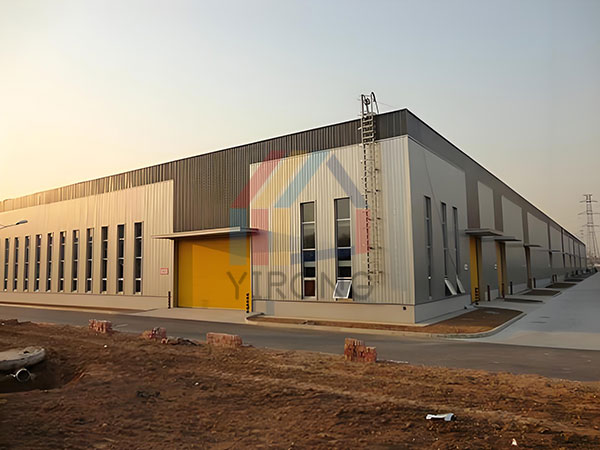
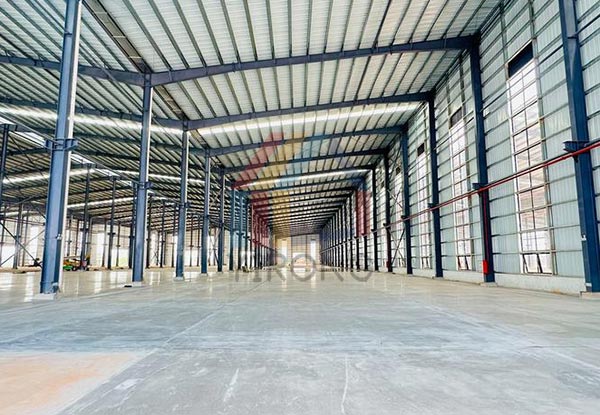
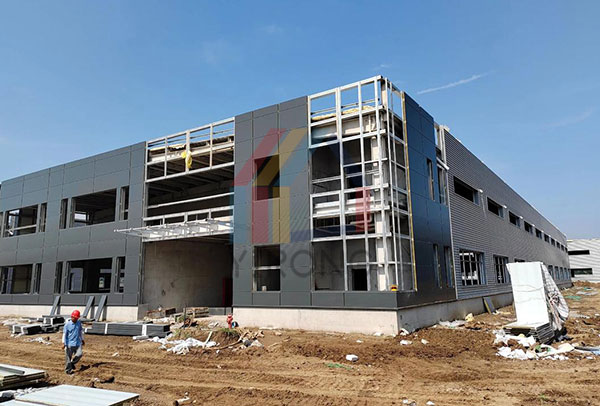
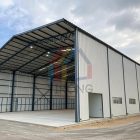
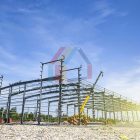
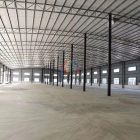
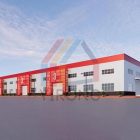
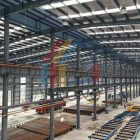
Low-carbon and energy-saving solutions for steel structure factory buildings
I. Why Steel Structures are the Preferred Choice for Low-Carbon Factory Buildings?
Global industrial energy consumption accounts for over 30% of total carbon emissions, while traditional concrete factory buildings are inherently high in carbon and difficult to dismantle and recycle. Steel structures, with their core advantages of high strength, recyclability, and rapid construction, have become a key carrier for low-carbon transformation.
Material Recyclability Exceeds 90%: Steel can be infinitely recycled, reducing carbon emissions from mining and smelting.
Lightweight Design: Weighing only 1/3 of concrete for the same span, reducing foundation energy consumption.
Modular Construction: Factory prefabrication and on-site assembly shorten construction time by 50% and reduce construction pollution.
Case Study: Tesla’s Berlin Gigafactory uses an all-steel structure. Through BIM-optimized design, steel usage was reduced by 15%, and the construction period was shortened to 11 months.
II. Four Core Energy-Saving Strategies
1. Passive Design First
Optimized Natural Lighting: Sawtooth roofs and high side windows introduce diffused light, reducing daytime lighting electricity consumption (e.g., BMW’s Leipzig plant in Germany).
Ventilation and Cooling System: Utilizing the principle of thermal pressure ventilation, combined with operable skylights, summer cooling energy consumption is reduced by 40%.
Integrated Shading: External aluminum alloy louvers or photovoltaic panels provide both shading and power generation.
Building Integrated Photovoltaics (BIPV): Rooftop cadmium telluride thin-film photovoltaic panels generate up to 150 kWh/m² annually (e.g., LONGi’s Shaanxi base).
Ground Source Heat Pump System: Utilizing underground constant-temperature layers to regulate room temperature, achieving a coefficient of performance (COP) of over 4.0.
Wind Power Coupling: Coastal plants are equipped with small vertical axis fans to supplement electricity demand.
4. Intelligent Operation and Maintenance Empowering Energy Efficiency Improvement
IoT Sensor Network: Real-time monitoring of temperature, humidity, and light intensity, automatically adjusting air conditioning/lighting.
Digital Twin Platform: Simulating energy consumption under different operating conditions to optimize equipment operation strategies.
AI Predictive Maintenance: Predicting equipment failures through vibration analysis to avoid unplanned downtime losses.
III. Practice and Policy Support
EU: Implementing the Green New Deal, requiring new industrial buildings to achieve near-zero energy consumption by 2030.
China: The 14th Five-Year Plan explicitly promotes steel-structure prefabricated buildings, with many regions offering floor area ratio incentives.
USA: The LEED certification system provides tax credits for energy-efficient factories, up to 30% of construction costs.
Benchmark Project: The Dubai Solar Park Operation and Maintenance Center uses an all-steel structure + BIPV roof, generating 120% of its own electricity needs annually and achieving LEED Platinum certification.
IV. Future Trends
Circular Economy Model: Establishing a steel recycling alliance to promote the direct reuse of components dismantled from old factories.
Green Hydrogen Steelmaking Applications: The Swedish HYBRIT project achieves zero-fossil-energy steelmaking, reducing carbon emissions to zero.
Regional Energy Sharing: Industrial park-level microgrids integrate wind, solar, and energy storage resources, improving overall energy utilization.
Conclusion
Steel structure factory buildings are transitioning from green buildings to zero-carbon factories. Through a four-dimensional linkage of design optimization, material innovation, energy transformation, and digital empowerment, enterprises can not only reduce operating costs but also seize ESG investment opportunities. The global low-carbon race in manufacturing has begun; a green future built on steel structures awaits you!