Steel Structures vs. Concrete: Which performs better in earthquakes?
If comparing the earthquake resistance of materials, steel structures have a slight edge. However, the consensus in modern engineering is that concrete structures, strictly adhering to earthquake-resistant design principles, can also withstand earthquakes with excellent performance. The real winner is not a single material, but rather advanced design concepts and construction quality. However, if a choice must be made between pure steel and pure concrete, steel structures, with their superior ductility, lightweight, and toughness, often exhibit a higher safety margin in earthquakes.
I. Why are steel structures the preferred choice for earthquake resistance?
To understand this, let’s look at how earthquakes destroy buildings. Earthquakes inject energy into buildings through ground shaking. Buildings must dissipate this energy through deformation and damping. At this point, two material properties determine survival: ductility and weight.
1.1. Superior Ductility, Meaning Deformation Without Collapse
Steel is a typical ductile material, capable of being repeatedly bent like wire without breaking. 1. During an earthquake, steel frames can enter a plastic phase, creating “plastic hinges” through bending and stretching, much like a car bumper, absorbing a large amount of energy while maintaining overall uprightness. This provides valuable escape time for people.
1.2. Lighter weight, naturally less seismic force
Seismic force is directly proportional to the building’s weight. Steel structures typically weigh only 50%–70% of similar concrete structures. Half the weight means a significant reduction in seismic force. With a lighter body resisting the same shaking, steel structures have a head start.
1.3. High toughness, strong fatigue resistance
The uniform microstructure of steel allows it to withstand repeated loads without cumulative damage. In contrast, ordinary concrete, under repeated tension and compression, will gradually expand internal cracks, leading to a decrease in strength.
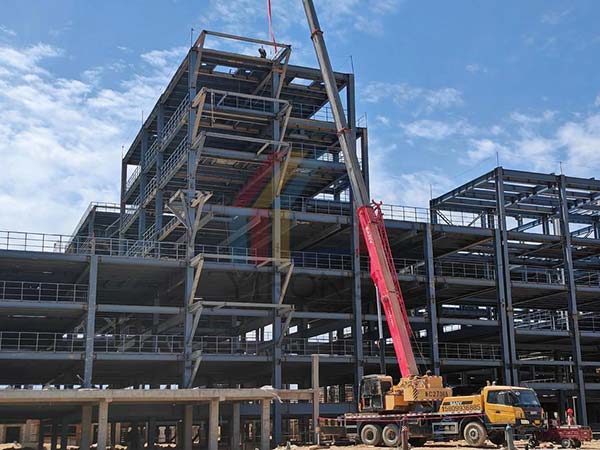
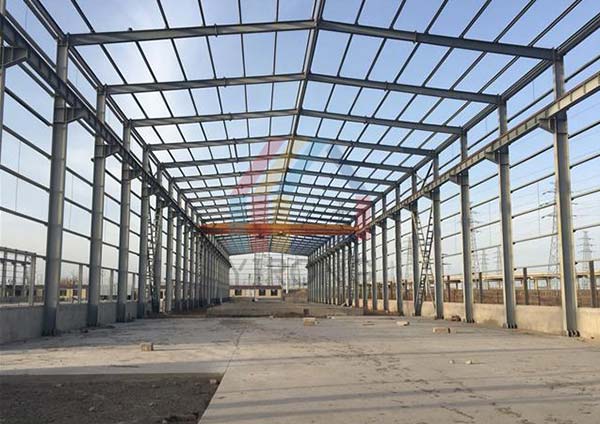
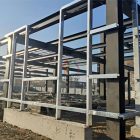
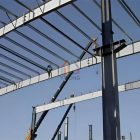
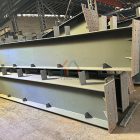
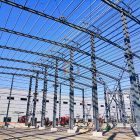
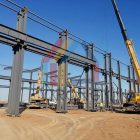
Steel Structure Building
II. Concrete structures are not weak; modern technology is changing the rules
If steel structures were truly perfect, there wouldn’t be so many high-rise buildings worldwide still using concrete. The seismic performance of concrete structures today is vastly different from what it was decades ago.
2.1. Ductility is no longer the sole domain of steel
Modern earthquake-resistant concrete structures are rigorously configured with numerous stirrups and confined edge members. These dense steel bars act like a “net” tightly encasing the core concrete, allowing the core to withstand significant deformation without collapse even if the concrete cracks. A well-designed ductile concrete frame can achieve a displacement ductility coefficient of 4–6, fully meeting the requirements for strong earthquakes.
2.2. Inherent High Stiffness, Controlling the Minor Earthquake Experience
Concrete structures have large cross-sections and naturally high stiffness. Under minor and moderate earthquakes, their lateral displacement is minimal, better protecting non-structural components and maintaining the building’s functionality. This is crucial for hospitals and data centers.
2.3. Composite Structures Break Boundaries
Today, the industry’s answer is increasingly not a binary choice. Steel-concrete composite columns and steel-concrete composite members have become the backbone of super high-rise and complex buildings.
Steel-concrete composite: High-strength concrete is filled within a steel tube, combining the ductility of steel with the compressive strength of concrete, resulting in excellent resistance to local buckling, load-bearing capacity, and energy dissipation capacity.
Steel-concrete composite: Steel reinforcement is embedded within concrete, simultaneously enhancing stiffness, ductility, and fire resistance.
This type of composite structure blurs the lines between “steel” and “concrete,” making it difficult to categorize it as either. However, its earthquake performance is enviable even for pure steel or pure concrete.
III. Key Parameter Comparison: Steel vs. Concrete
Comparison Dimension
Steel Structure
Concrete Structure
Ductility (Energy Dissipation)
Excellent; can achieve very large plastic strains
Dependent on reinforcement; modern ductile design can reach moderate-to-high ductility levels
Self-weight (Seismic Force)
Light, resulting in smaller seismic inertial forces
Heavy, often leading to larger seismic response, but also provides greater overturning resistance
Stiffness (Displacement Control)
Relatively flexible; may undergo large displacements under major earthquakes, often requiring supplementary damping systems
Inherently high stiffness, providing better comfort under minor earthquakes
Construction/Quality Controllability
Factory prefabricated, welded/bolted connections; quality can be workmanship-dependent but is controllable
Extensive on-site wet work; highly sensitive to construction quality (especially stirrup detailing) in seismic zones
Cost & Maintenance
Higher initial cost; requires fireproofing and anti-corrosion maintenance
Relatively economical; excellent inherent fire resistance and low maintenance
Sustainability (Current Industry)
High recyclability, but production process has high emissions; green steel is evolving
Cement has a huge carbon footprint; the industry is rapidly shifting towards low-carbon concrete (e.g., geopolymers)
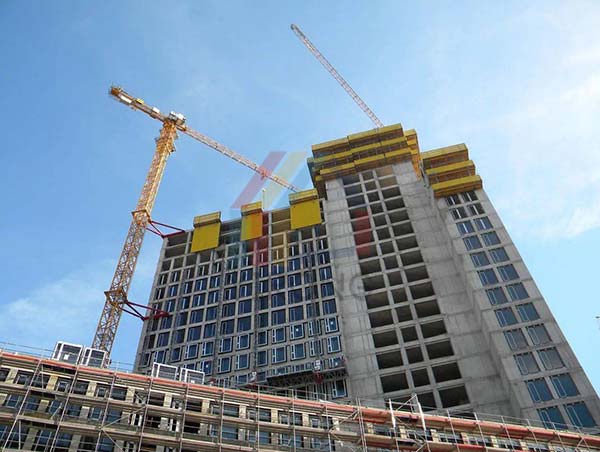
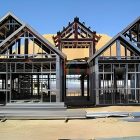
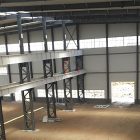
Concrete Structure Building
IV. Industry Status
Today, global earthquake-resistant engineering is shifting from relying solely on single materials to integrated system design, with three major trends:
Performance-based design is becoming widespread: High-rise buildings in New York, Tokyo, and Shanghai no longer merely aim to “not collapse,” but rather accurately predict whether the building can be immediately used under different earthquake conditions. Designers choose materials based on requirements: steel for extreme flexibility, high-strength concrete for superior overturning resistance, and often, a balanced combination of both.
Seismic isolation and damping technology is becoming standard: Many steel and concrete structures use rubber seismic isolation bearings or dampers to isolate or absorb seismic energy at its source. At this point, the inherent differences between the main structural materials are largely eliminated.
Post-Disaster Reflections and Normative Evolution: From the 1995 Hanshin earthquake to the 2011 Christchurch earthquake, and then to the 2023 Turkey earthquake, global standards have more rapidly phased out non-ductile concrete practices while simultaneously pushing for stricter prevention of brittle fracture at steel beam-column joints. Each earthquake has led to improvements in both the shortcomings of steel and concrete.
Currently, in Japan, low-rise residential buildings often use lightweight steel or wood, while mid- to high-rise office buildings extensively employ steel frames with dampers. In Chile, an earthquake-prone country, buildings with concrete shear walls and rigorous ductile design have demonstrated exceptional resilience. On the West Coast of the United States, steel and concrete are equally prevalent, but composite steel and concrete structures dominate in buildings over 30 stories.
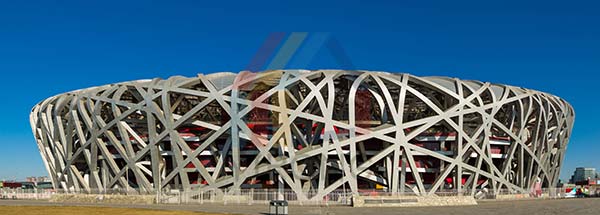
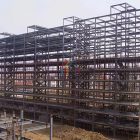
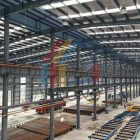
Steel Concrete Structure Building
V. Conclusion
From a purely material physical property perspective, steel structures, due to their overwhelming ductility and light weight, have a slight edge. They allow buildings to bend more, consume more energy, and provide a more generous window of opportunity for escape and rescue.
However, looking at reality, a modern ductile concrete building designed and meticulously constructed according to cutting-edge standards, and potentially equipped with seismic isolation pads, can possess seismic safety comparable to, or even superior to, ordinary steel structures, in terms of collapse reserve due to its weight advantage.
What truly exposes fatal weaknesses in earthquakes is never the steel or concrete itself, but rather shoddy workmanship that ignores standards, outdated and brittle designs, and crude connections that neglect joint details.
Therefore, the message to builders is simple: Choose steel, and you’ll more easily achieve a high ductility reserve, but pay close attention to fire and corrosion resistance. Choose concrete, and if you build it with dense reinforcement and superb construction, it can be as solid as a rock. The future belongs to hybrid structures combining steel and concrete. Combining the advantages of both, it is redefining human freedom of habitation in earthquake-prone areas.